
Category: politics
Verticalisation and Horizontalisation
There are many competing theories of political spectrums. The best known is left-right, but libertarian-authoritarian and traditionalist-progressivist are two popular others. This essay contends that the most instructive way to look at the basic political division is to split it into what we call verticalists and horizontalists, based on crude biopolitical sentiments.
These terms refer not to a person’s ideal distribution of resources or land, or to the status quo or change, but to a person’s preferred form of social dominance hierarchy. In this sense, verticalists correspond to what has traditionally been called a “masculine” kind of politics while horizontalists correspond to what has traditionally been called “feminine”.
Verticalists also overlap heavily with what has hitherto been considered the right, and horizontalists with the left, but it isn’t as simple as this.
The basic belief of a horizontalist is that the dominance hierarchy ought to be flattened, or at least that the ideal dominance hierarchy is a relatively egalitarian one. This entails that no-one can exalt themselves too far above the others or above the average. The basic belief of a verticalist is that it is morally permissible for an individual to acquire many, many times more wealth or power than the average person.
Horizontalists are therefore much like mainstream leftists when they contend that CEOs should not be allowed to earn 500 times more than the most lowly-paid workers at their company, or when they express a dislike of feudal monarchy. Their core sentiment seems to be a belief that people should not be allowed to wield power over others, and that to do so is obscene.
Verticalists don’t feel the same sense of injustice that horizontalists do at the thought of a dominance hierarchy in which some positions carry much, much more power or prestige than others. They are much more comfortable with the thought of a person having exclusive control over an area, such as a fascist dictatorship.
There are essentially two types of verticalists.
The first are those who think that they themselves are the natural inheritors of the top of the dominance hierarchy. These people are the natural alphas. Usually they are distinguished from the others by being exceptionally vigorous, strong or intelligent. Sometimes their distinction is a matter of will.
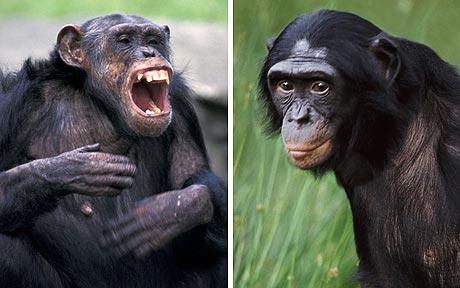
The second are those who want to serve the first group, in the hope that some of the spoils of war fall to them. These are the natural betas. If one observes the natural dominance hierarchies that occur in chimpanzee troops, it is clear that this alpha-beta vertical distinction is a naturally occurring phenomenon in social creatures.
Horizontalism draws its power out of a discontentment with this primitive way of things. Some people naturally have a moral objection to others wielding great amounts of power. Horizontalists tend to think that such a thing is obscene, and that “the people” (i.e. the betas) need to work together to avoid being exploited out of their fair share of the proceeds of their labour.
Horizontalisation probably came about when some early primate realised that the alpha male of their tribe was preventing them from accessing reproductive opportunities by means of extreme jealousy and possessive violence over the tribe’s females, and that if our early primate teamed up with a like-minded they could collectively eliminate the alpha male and thus gain access to those females.
Over time, this created a selection pressure in favour of those males who reacted angrily to other males asserting dominance and control over large amounts of resources. In other words, there was a selective pressure in favour of those who believed in horizontalism.
There are also two types of horizontalists. The first are those who do not themselves think they are the natural inheritors of the top of the dominance hierarchy. These people are similar to the beta males who become verticalists, only they have chosen another strategy. Instead of trying to work with and for the alphas, they aim to supplant them and become the new alphas themselves.
The second are those who promote horizontalisation for idealistic reasons, despite being in the upper half of the dominance hierarchy themselves. These people are often very intelligent and have taken a particularly long-term view, because a long-term view will naturally suggest that one should focus on co-operation rather than competition. These people are the natural nation-builders and philosopher-kings, and are extremely rare.
A verticalist generally has no problem stating that one thing is more valuable than another. For example, they might be comfortable saying that Person A is a great man and that Person B is a piece of shit. A horizontalist, on the other hand, is disinclined to show great respect to Person A and is also disinclined to show great disrespect to Person B. In this sense the verticalists are more masculine and the horizontalists more feminine.
Verticalism differs from the popular conception of right wing in several ways. A verticalist has no problem with a person smoking cannabis, for example, because that doesn’t impact the individual verticalist’s ability to get ahead. Whether or not cannabis is legal doesn’t make it harder or easier for a verticalist to get ahead from their own effort, so they won’t support it for the sake of mere tradition like a conservative, or for the sake of destroying poor and non-white people like a right-winger.
Also, verticalists don’t tend to be either racist or misogynistic. A verticalist doesn’t have a problem with respecting a black man or a woman as long as those people are capable of distinguishing themselves from the plebs by their own merit. In this manner, there is an overlap between verticalism and Luciferianism.
Conversely, horizontalism differs from the popular conception of left wing in that it doesn’t need to posit a new ruling class in the form of any kind of global authority. A horizontalist feels absolutely no need to crate a global hierarchy in which an entity like the United Nations wielded great power over the peoples of the Earth. Horizontalists are fairly anarchistic in that sense.
Furthermore, a horizontalist would likely oppose mass immigration from poorer countries, for the reason that this tends to form an underclass of people who aren’t really a part of the nation, and an overclass of wealthy landowners who benefit handsomely from the cheap labour and increased demand for housing. Horizontalists might therefore have more in common with national socialists than with regular socialists or Marxists.
Alchemically, all of these positions relate to the four masculine elements. The basic verticalist dichotomy can be said to reflect the basic feminine-masculine distinction between clay and iron, between the passive, receptive yin and the active, outgoing yang. The horizontalists are themselves split into the false egalitarians of the silver and the true philosopher-kings of gold who intend to lead humanity out of the brutality of biological dominance hierarchies.
*
If you enjoyed reading this essay, you can get a compilation of the Best VJMP Essays and Articles of 2017 from Amazon for Kindle or Amazon for CreateSpace (for international readers), or TradeMe (for Kiwis).
Bushpig
How Do We Know They’re Not Lying Again?

In 2003, Britain teamed up with America to attack Saddam Hussein’s Iraq on false pretenses, an action that would eventually lead to over 1,000,000 preventable deaths – a war crime by any standard. 15 years later, Britain is again beating the war drums over a supposed Russian assassination of a former Russian intelligence agent on British soil. The question the rest of us have to ask is obvious: how do we know they’re not lying again?
The British Prime Minister in 2003, Tony Blair, solemnly presented to the world a “dossier of death” that supposedly detailed Hussein’s arsenal of chemical and biological weapons, ready to attack Britain within 45 minutes of the Iraqi strongman giving the orders. Even worse, the dossier claimed, Hussein had procured significant amounts of uranium from African sources, enough to build 200 nuclear bombs.
We were told all this, and then told that the international community “had no choice but to act”. It was a casus belli of such strength that it was apparent there would be no talking the Anglo-Americans out of their impending action. Iraq was, in Blair’s words, “a current and serious threat to the UK national interest”.
The trouble is, all of those claims were lies.
Hussein’s Government disintegrated at the first sight of the iron wave coming their way, and the victorious Anglo-American forces scoured every square metre of the country for the chemical and biological weapons that would have been triumphantly paraded before the world’s media. Had they been found. There were no chemical and biological weapons in Iraq.
Usually when someone lies to you, and you find out about it, you don’t trust them again until you are satisfied that they have learned the value in honesty. But no contrition has been shown, ever, by any of the leaders who worked to bring about the slaughter in Iraq. Neither George W Bush nor Tony Blair have ever shown genuine regret for the invasion, or even the barest awareness that the invasion was the wrong thing to do.
Both George W Bush and Tony Blair are free men, not wanted by any Western war crimes tribunal. No Western leader openly calls for their arrest or imprisonment, despite that they murdered as many people as Pol Pot. No-one in British politics appears to be willing to commit Blair to trial for war crimes, the minimum acknowledgement necessary that the lost Iraqi lives had some value.
So why should we trust the claims of the British Government this week that the Russian state killed someone on British soil? Nothing appears to have changed since the last time they lied.
Most worryingly for New Zealand, our current Prime Minister Jacinda Ardern volunteered to work for the unapologetic war criminal for two and a half years, and after the scale of the destruction wrought in Iraq was widely known, and even after the fact that the invasion was launched on false pretenses was known. This suggests that not even our Prime Minister has the moral fibre to understand that killing a million people with lies is a bad thing and that people who do it should not be supported.
The prospect for world peace is looking grimmer, but, as this newspaper has previously written about, there’s no need to worry until the television starts telling us that Russians are mistreating babies somewhere. Then it’s time to hit the bunkers.
*
If you enjoyed reading this essay, you can get a compilation of the Best VJMP Essays and Articles of 2017 from Amazon for Kindle or Amazon for CreateSpace (for international readers), or TradeMe (for Kiwis).