
The Case For Cannabis: God Put Cannabis Here

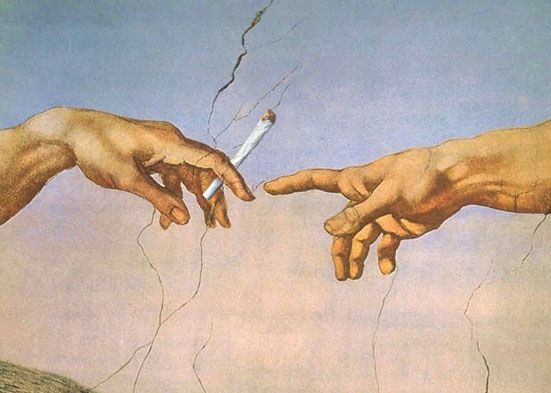
An uncommon argument for cannabis is that God put it here. This is an uncommon argument on account of the fact that religious sentiments are becoming rarer and rarer, but it has pull even for those who don’t follow an organised religion. As this article will explain, the argument that God put cannabis here remains a powerful one for some people.

Genesis 1:29 states: “And God said, Behold, I have given you every herb bearing seed, which is upon the face of all the earth…”

It’s obvious from reading this, on one of the first pages of the Bible, that according to Christian belief, God created cannabis specifically for the benefit of humans. Cannabis is a herb that bears seed, and we encountered it on the face of the Earth, so therefore a Christian ought to believe that its presence here on Earth is a gift from God that ought to be cherished.

Indeed, it’s obvious why a benevolent God would have created such a thing. For someone with the kind of illness that cannabis treats, it can feel like a godsend. Many people with psychological problems have found that cannabis can make the difference between a restful night’s sleep and eight hours of torture. For such people, providing cannabis is bound to engender feelings of gratitude.

Is it not true, then, that a human Government working to prohibit this medicine, and to make it harder for people to get hold of, is causing people to suffer needlessly, and therefore is doing evil work?

Christians are fond of saying that the world is ruled by Satan, and that the Governments of the world all serve Satan. This will to serve evil is the main reason, they contend, that evil exists. Satan desires to thwart the will of God and to destroy the creation of God, and to cause God’s most blessed creation to suffer on account of his infernal envy.

Fair enough, but then why support evil by opposing cannabis law reform? If Satan tricked the rulers of the world into prohibiting a medicine that God had created, why not vote to change it back?

If one opposes legal cannabis, is that not tantamount to saying that God made a mistake by creating cannabis for human use, and that humans know better than God by making it illegal instead? From an Abrahamic perspective, this surely constitutes a grave sin. It’s blasphemy to elevate the laws of men above the laws of God.

Christians must surely believe that cannabis ought to be legal for the reason that God put it here. Cannabis is part of the natural world, and if Christians believe that God created the natural world and saw that it was good, so it must be God’s will for humans to use cannabis as needed to avoid suffering.

A reader might object here, and say that this argument is just an example of the naturalistic fallacy. This objection argues that, even if one concedes that God created cannabis, this doesn’t mean that we should be using it. After all, we don’t eat nightshade berries either, and those are just as much a part of the natural world as cannabis is.

A logical person would agree. Just because cannabis is natural doesn’t mean that everyone should necessarily be using it. However – no-one is arguing for this. No-one is arguing that anyone should be forced to use cannabis, or even exposed to it in cases where this exposure would cause suffering. To the contrary, cannabis law reformers would argue that legalisation is better for keeping it out of the hands of the wrong people.

All that cannabis law reformers want is for the Government to stand back and allow them to use a natural plant, something that appears to be just as much a part of creation as the sunlight and the rain, as well as the wheat, apples, kiwifruit, potatoes and all the other plants.

Cannabis ought to be legal because it’s a moral obscenity for humans to arrogate to themselves the power to make parts of Nature, elements of God’s creation, illegal. There is a scriptural basis for believing that God put cannabis here for the benefit of humans, and anyone who believes in those scriptures surely must also believe that God did not do so in error.

*

This article is an excerpt from The Case For Cannabis Law Reform, compiled by Vince McLeod and due for release by VJM Publishing in the summer of 2018/19.

The Spear of Destiny

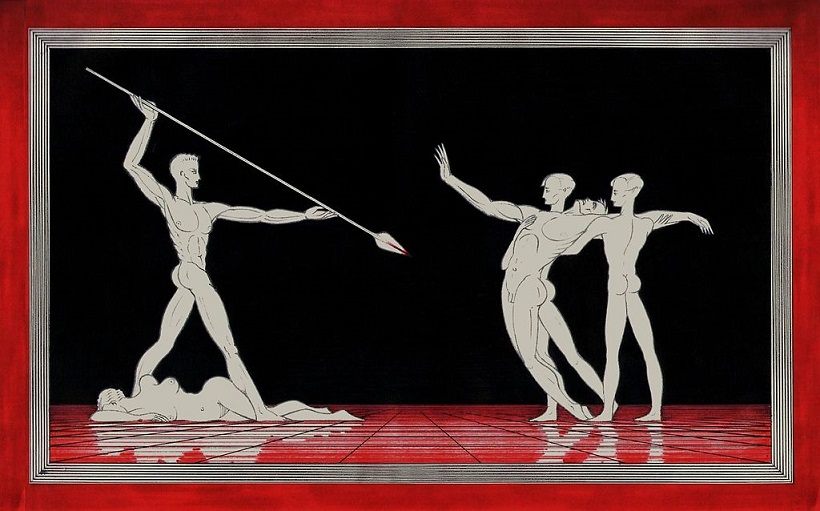
Many people with a passing familiarity with occultism will have heard of something called the Spear of Destiny. This is an extremely powerful concept with deep importance for the future of our planet. This essay discusses the occult meaning of the Spear of Destiny, and its implications.

Like many occult concepts, there is an exoteric and an esoteric form of the Spear of Destiny.

The exoteric form is the one that people are the most familiar with. The usual story is that the Spear of Destiny was the one held by the Roman centurion Longinus, which he used to pierce the abdomen of Jesus Christ while on the cross at Calvary. This spear apparently became a valuable relic, otherwise known as the Holy Lance.

The spear came into possession of the Holy Roman Emperors around 1,000 years ago, and has remained in Central Europe ever since. It was said that Adolf Hitler was obsessed with the Spear, and set a detachment of crack Waffen-SS troops to capture it when the Nazis annexed Austria. Today, it lies in the “Worldly Treasure-chamber” of Hofberg Palace in Austria.

However, that’s not what the Spear of Destiny really is. There’s an esoteric explanation that makes a lot more sense.

The real Spear of Destiny is a metaphysical object, and it is held by the most influential person on Earth, whoever that is. There is always one person on Earth whose initiative controls the destiny of the human race, one person who is more powerful than all others. This person has the ability to rewrite reality according to their will, as long as they continue to wield the Spear.

The first to hold the Spear of Destiny may have been Gilgamesh, the first king of Sumeria and arguably the progenitor of civilisation. As the first king in the world, Gilgamesh was the first man to truly put the environment around him to order. Therefore, he was the greatest and most powerful man on Earth, at least for a time.

The Spear of Destiny then moved to the West and to the North, as it would continue to do for at least four thousand years. The next inheritor of it may have been a leader of the Akkadian Empire that arose after Sumeria, probably Sargon of Akkad. The Spear would remain in Mesopotamia for many centuries, as it was the only place that civilisation and order existed to a meaningful degree.

Babylonian kings no doubt held the Spear for some time. Hammurabi would have held it when he composed his famous set of laws. Ashurbanipal may have held it at the time of the neo-Assyrian Empire, and the neo-Babylonians held it after him. Nebuchadnezzar may have held it at about the time the dream from the Book of Daniel occurred.

At some time around 500 B.C., the Spear of Destiny left the Ancient Near East, and came to Greece in time for their Golden Age. The Spear of Destiny was certainly held by Alexander as his Macedonian armies conquered almost the entire world known to them. Alexander was probably the single most influential man who ever existed, and he made the Spear his own.

After Alexander’s Empire collapsed and the Golden Age of Greek culture began to fall away, the Spear continued its Westward motion, ending up in Italy in time for the ascent of the Roman Empire. Without doubt, it was held by Julius Caesar, who used it to become one of history’s most influential statesmen. Trajan would have held it as the Roman Empire reached its greatest influence.

Before Trajan, however, there was Jesus Christ, whose dramatic and total reformation of Abrahamism created a religious movement that would grow to become the world’s largest. Longinus may well have held the metaphysical Spear of Destiny on the date of Christ’s crucifixion, because Jesus Christ was the most influential individual of his time, and Longinus took that mantle by killing him.

The Spear of Destiny remained with the Roman Emperors for a few hundred years after Trajan. Who held it during the Dark Ages is unclear, but it can be perceived again in the possession of Charlemagne, as the Frankish king put order to much of Western Europe. The Spear spent some time in the Holy Roman Empire, which was founded by Charlemagne in 800.

William the Conqueror may have held it in 1066 during the invasion of England, and Marco Polo may have held it during his travels in the 13th century. In any case, the Mediterranean rulers of Venice, Genoa and the later Iberians appeared to be in control of the world’s destiny at this time.

As the Age of Exploration began, the Spear may have been held by Christopher Columbus, but was more likely held by his patrons, King Ferdinand of Aragon and Queen Isabella of Castile. As Iberian dominance wound down, to be replaced by Northern European control, the Spear moved to Holland.

The Spear of Destiny was held by William of Orange at the peak of the Dutch Empire, and dramatically leapt over the English Channel after the Glorious Revolution of 1688. Shortly after this event, England would combine with Scotland into “One Kingdom by the Name of Great Britain.” This soon became the British Empire, the largest and most powerful the world had ever seen.

The Spear of Destiny would remain in Britain for at least two centuries, being held at one point by Queen Victoria as the British Empire expanded into a force capable of conquering the globe. After the carnage of World War One, the Spear of Destiny became attracted across the Atlantic, probably to New York, and probably into the hands of Theodore Roosevelt.

Adolf Hitler’s supposed obsession with the Spear can be better understood in this context. The exoteric story is that “Hitler believed the power of the weapon would give him the power to conquer the world“, and that Hitler said, of seeing the Holy Lance, “I myself had once claimed it as my talisman of power and held the destiny of the world in my hands.”

The esoteric story is much different. Hitler knew of the metaphysical Spear of Destiny and wished to take it back from the Anglo-Americans. Had he succeeded in conquering Europe and bringing Britain and America to the peace table, Hitler may well have taken possession of it, and he may well then have held the destiny of the world in his hands.

History, of course, had other ideas. From the East Coast of America, the Spear seems to have travelled further West, and probably now resides in California. It’s possible that Donald Trump holds it, but it’s also possible that it’s in the possession of a Los Angeles movie or music magnate, considering the reach of American soft power.

The future, of course, is unknown. But we can predict, given the relentless Westward motion of the Spear of Destiny over the past 4,000 years, that it will at some point cross the Pacific. Most people already believe that China is destined to supplant America as the world’s foremost power, and this means that the Spear might move there in coming centuries.

This is no guarantee, of course. The Spear might pass to Japan first, or even Korea or Indonesia. Another possibility, considered by very few, is that it may pass to Australia, as the Southern Kingdom has the land area to build a monumental empire over the next few hundred years. After that it may move to India.

All that can be said for sure is that the Spear of Destiny is the single most sought after object in this section of the Great Fractal, and therefore it can be predicted that people will fight for control of it as long as human civilisation exists.

*

If you enjoyed reading this essay, you can get a compilation of the Best VJMP Essays and Articles of 2018 from Amazon for Kindle or Amazon for CreateSpace (for international readers), or TradeMe (for Kiwis). A compilation of the Best VJMP Essays and Articles of 2017 is also available.
The Case For Cannabis: Cannabis Is A Religious And Spiritual Sacrament

We are supposed to have freedom of religion in the West, but in practice this only applies to certain favoured religions, in particular Abrahamism and its derivatives. Other religious traditions, particularly those that employ psychoactives as part of their rituals, are effectively discriminated against by the War on Drugs. This article will discuss the established tradition of cannabis use as a religious and spiritual sacrament.

The Indo-European peoples have been using cannabis as a religious and spiritual sacrament for thousands of years.

Cannabis is mentioned in Indian texts going back to 1,000 B.C., primarily for its use as a medicine, but also for its purported ability to facilitate contact with the divine. There is an age-old tradition in India of weed-smoking holy men known as sadhus. These are ascetics who have renounced worldly wealth and pleasure, and who use cannabis to get into touch with Shiva. Among sadhus, use of cannabis is especially popular when meditating, for the moments of tranquillity and serenity that it is capable of bringing.

The Nepalese smoke it publicly and ceremonially during the festival of Maha Shivaratri. The enlightenment brought about from the cannabis high is said to represent the coming-to-awareness of the first guru in the world. It is said that it was at this moment that the consciousness of the first guru transcended the material and the illusion of space and time, and the cannabis high is intended to replicate this.

In ancient China, cannabis was used by holy men in healing and early magical rituals. Early Taoist shamans systematically experimented with the ritual use of cannabis, with some declaring that smoking it was as good as climbing into the mountains for those who were physically unable. Their traditions began with burning cannabis as incense for the sake of smoking out demons and evil spirits, and soon evolved into inhaling cannabis for the sake of drawing in good energy from God.

Cannabis was also used by the Scythians in a ritualistic form that amounting to the hot-boxing of small smoke tents. The participants would gather inside these tents as part of funerary rites and cast buds onto superheated rocks, causing them to burn and to fill the tent with cannabis smoke. The change in consciousness brought about by these rituals were considered to bring the participant into contact with the spirits of the dead.

From there, it spread to Germany, and from there to Britain and Scandinavia. The Vikings came to associate its aphrodisiac effects with the fertility goddess Freya, and spring festivals sometimes involved the ritual consumption of cannabis. Viking herbalists were also aware of the pain-killing properties of cannabis, and they appear to have cultivated it in Southern Norway since 650 A.D. Evidence suggests that at least some of this cannabis was cultivated for ritualistic and shamanic purposes.

Therefore, cannabis use has been part of our natural spiritual traditions for thousands of years. The state of cannabis prohibition brought about by Abrahamism is an obscenity, the kind that comes from such false doctrines. It is not right for us Westerners to live in a state of cannabis prohibition, because it separates us from our natural connection to the divine, replacing it with a doctrine of women-hatred, gay-hatred, genital mutilation and ignorance.

Many modern people could tell you that cannabis use is still part of our natural spiritual traditions. It is the Western subcultures that smoke cannabis who are most likely to reject the obsession with materialism that has captured our culture. After all, the spiritual effect of cannabis comes from its ability to separate the user from the material. By inducing a state of physical and emotional calm, consciousness focuses instead on the spiritual. By pacifying the user’s base physical desires, they can concentrate on a form of living that pays homage to God.

Rastafarians say of cannabis that “The herb is the key to new understanding of the self, the universe, and God. It is the vehicle to cosmic consciousness”. Many Westerners who do not follow an organised religious tradition can likewise tell you that smoking cannabis gets you closer to God. There are millions of us who could tell you that we have had profound spiritual epiphanies from sacramental cannabis use, and that these epiphanies are worth gold.

Cannabis being illegal therefore amounts to religious discrimination. It’s essentially no different to a law that makes the Bible or the Koran illegal. If cannabis use is a means by which some people get closer with God, how can it possibly be anyone else’s right to say otherwise? The people who support cannabis prohibition would be appalled at the thought of Government agents going into someone’s house to take their Bible away, but they do much the same thing with cannabis without a second thought.

There is a need for cannabis law reform so that religious and spiritual alternatives to Abrahamism can be explored. There is no valid reason for people to be forced to follow an Abrahamic tradition, and therefore no valid reason for the law to prohibit the spiritual sacraments of non-Abrahamic traditions. True spiritual and religious freedom requires that none of the established methods for coming closer to God are made illegal – this includes cannabis use.

*

This article is an excerpt from The Case For Cannabis Law Reform, compiled by Vince McLeod and due for release by VJM Publishing in the summer of 2018/19.