
The Fallacy of Pre-Emptive Violence

At a march in Washington D.C. this week, accused neo-Nazi Richard Spencer was kinghit from the blindside by a mystery black-hoodie-clad protester. Footage of the incident was the most viral meme of the entire Inauguration period, trumping even anything the U.S. President said. The reaction of the Internet, predictably, was divided.

One part of the viewership was appalled by the purposeless attack on the sacred value of free speech; another part was excited to an almost sexual state of arousal by the sight of a Nazi getting what they thought he deserved.

Justification for the latter reaction began almost immediately, and was earnest, although convoluted. The basic premise, however, was eerily familiar: Spencer was a Nazi, Nazis want to violently take over the world, therefore they can essentially be attacked at any time in pre-emptive self-defence.

On the face of it, it’s hard to argue with that line of reasoning. The excuse that “I just got the bear before the bear got me” was after all, the excuse George W. Bush used to invade Iraq and kill a million people – and he completely got away with it.

There’s one glaring problem with the Bush Doctrine though, especially when it is applied to blindsiding people in the street for their political opinions: the potential excuses that a person might make to conduct ‘pre-emptive’ violence against another is limited only by human ingenuity.

In the same way that conservatives delude themselves into believing they are compassionate, liberals delude themselves into believing they are tolerant.

For a start, the logic that any violence against Nazis is justified because Nazism is a supremacist political movement also justifies violence against any of the Abrahamic cults, as they are also supremacist ideologies.

It would then be legitimate to beat the shit out of any Christian or Jew one met on the grounds that their holy book contains a command from God to kill homosexuals. One could also conduct pre-emptive violence for a number of reasons against any Muslim you met.

Any American could be dealt to under the logic that American imperialism is one of the prime threats to the stability of the world order, and any European could be shown some fist on the grounds that prior imperialism suggests a high likelihood of future imperialism. Any Chinese or Indian could be bashed because their massive populations threaten the viability of the biosphere.

If someone calls you a Nazi, whether you are one or not, that could be an excuse for pre-emptive violence on the grounds that the epithet is generally only levelled at people who are murderous totalitarians and therefore should be killed with extreme prejudice. And people are being called ‘Nazi’ at ever-increasing rates – it’s almost become synonymous with ‘to the right of the speaker.’

If someone calls you a Commie, whether you are one or not, that could be an excuse for pre-emptive violence on the grounds that the epithet is generally only levelled at people who are murderous totalitarians and therefore should be killed with extreme prejudice. And people are being called ‘Commie’ at ever-increasing rates – it’s almost become synonymous with ‘to the left of the speaker.’

This means that anyone can find a reason to attack anyone else pre-emptively. It’s just a simple matter of knowing if you are doing it because your target is a Nazi or because they are a Commie.

As anyone who walked the streets of Weimar Germany could tell you, National Socialists and Communists are just ready made for fighting, like the yang and yin of violence. Their natural instinct is to go each other like two stags in rutting season.

Perhaps the best course of action for reasonable people is the Churchill Doctrine that served Britain so well in World War II: just stand back and let them kill each other.

P.S. Our anarcho-homicidalist readers usually enjoy seeing any kind of political extremist get punched in the head, so here’s the funniest dubstep remix of the incident we could find.
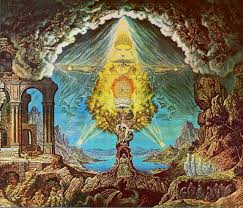

Political Gnosticism: Why a Demiurge Would Have Created Both a Left and Right Wing

Of all the world-hating, female-fearing, life-denying cults that sprang up in the wake of the Curse of Abraham, one of the most interesting is Gnosticism. As far as Abrahamic cults go, it’s unusually moderate, and its adherents appear to have achieved a far higher level of general spiritual awareness than the others. It’s worth taking a closer look at.

Gnosticism might not even really be an Abrahamic cult, as the sentiments that led to its creation may predate Abraham and go all the way back to Zoroaster, but the common interpretation of it nowadays is in the Christian context, as it was codified in the Christian Syria and Egypt of the second century A.D.

We may never really know if this movement was started by Christians who accidentally got close to the truth or if it was started by people who knew the truth and therefore knew that they had to modify it to fit a Christian paradigm for it to be accepted. Therefore we cannot judge if the Gnostics basically had it right or wrong (at least not here).

The essentials are this: there exists a unified, remote, supreme force that is considered a deity. From this deity various lesser forms have emanated. It is one of these forms – known as the demiurge – that has created our material world. In some schools of Gnosticism this demiurge is considered merely imperfect – in others, outright evil.

The essential idea that the world as it appears to the senses is not the full story is an idea that is shared with many other esoteric traditions. On the face of it there are similarities with the Hindu concept of Maya.

Let’s leave aside what we know about consciousness and the contents of consciousness for now. This essay posits a simple argument: any demiurge intelligent enough to have created the world in which we find ourselves wouldn’t do anything so simple and easy to outwit as merely maintaining the illusion of a material world.

A clever demiurge would create two competing illusions, one masculine and one feminine. In this manner, the vast majority of people will spend all their time and wit trying to figure out which of the masculine or feminine illusions are correct, never suspecting that they were both shadows cast by one black fire.

This is a far more accurate picture of our world that to posit simply truth and illusion. There is not only truth and illusion, but truth within illusion, and enough so to make it far more powerful an illusion.

After all, if we were merely trapped in an illusion, then knowing the truth would be a simple matter of outlining the illusion and then looking at its opposite.

A clever demiurge might create just the one material world, but it would be created in a way such that there were at least two entirely different interpretations of it, and therefore conflict. This conflict would itself intensify the power of the illusion, as it would force all of us in the material world to take it seriously or suffer and die.

The most obvious way to understand this is to look at modern politics from a Gnostic viewpoint.

Most of us agree that there is only one material world, but, by way of example, consider these two competing perspectives. If one looks at the world in a feminine way it is natural to conclude that the primary imperative was to co-operate. If one looks at the world in a masculine way it is natural to conclude that the primary imperative was to compete.

This can lead to two entirely different attitudes to life, which naturally cause their bearers to come into conflict. After all, if someone is truly committed to competition there is no way to co-operate with them short of abject submission.

If one takes a fundamentally feminine perspective it may be that one looks to co-operate first and foremost and is thus likely to end up supporting a social democrat party. This will inevitably lead one into conflict with anyone taking a fundamentally masculine perspective, because this latter group will resent paying the taxes demanded by the social democrats.

If one takes a fundamentally masculine perspective it may be that one looks to compete first and foremost and so ends up supporting a conservative party, and so comes into conflict with those taking a fundamentally feminine perspective, because this latter group resents the inequality, coercion and social decay demanded by organising society for optimal capital production.

The demiurge may have achieved all this by emanating from itself lesser demiurges. Perhaps there’s a left wing demiurge making us want to do stupid things like let millions of Muslims in, and a right wing demiurge making us want to do stupid things like spend our children’s education money on a giant bronze statue of Jesus.

If any of this is true, the only way to find absolution is to reject entirely the belief that politics is a lens through which the truth appears. The left wing tells half truth and half lies, and the right wing simply tells the truth where the left lies, and lies where the left tells the truth.

Understanding New Zealand: Men and Women

The statistics we have examined so far have gone down into some fine details, but a correlation matrix is also useful for giving us information about high-level categories, such as men and women. What can the elementary gender division tell us about Kiwis?

Some points that stand out are ones that were already fairly well known. Men are slightly wealthier than women – the correlation between being a man and net personal income was 0.23. Also, to continue the general theme of minor social advantage, the correlation between being a man and voting in the 2014 General Election was 0.29.

Perhaps less well known is that men really like the National Party. The correlation between voting National in 2014 and being male was 0.35, which was significant. This was mirrored on the centre-left: the correlation between voting Labour in 2014 and being female was 0.31.

Neither of those statistics is surprising if the reader is aware of the many parallels between masculinity and conservatism, in particular the desire for the maintenance of a relatively high degree of order.

Likewise, there are clear parallels between femininity and social democracy, in particular the desire for a relatively egalitarian distribution of wealth and social status.

There are small, not significant correlations between voting Green and being male (0.10) and between voting New Zealand First and being female (0.21).

Of some interest, women smoke slightly more than men – being female has a correlation of 0.19 with being a regular smoker, although this is not significant. Possibly this reflects the value of nicotine as a treatment for certain anxiety and depression-related mental disorders, which women tend to suffer from at a greater rate than men.

Looking at gender differences in personal income and choice of employment, several interesting patterns reveal themselves.

One is that women are significantly more likely to be on any of the four benefits this study looks at. Although the correlation between being female and being on the pension was not significant (0.03), the others were much greater. Between being female and being on the student allowance the correlation was 0.21, with being on the unemployment benefit it was 0.39, and with being on the invalid’s benefit it was 0.26.

Being male was not significantly correlated with net personal income – the strength of this was 0.23, which was on the boundary of significance. However, looking at the next level down reveals a few patterns.

The personal income band most strongly correlated with being male was the $50-60K band. Here there was a correlation of 0.22. The female equivalent was the $5-10K band. There was a correlation of 0.21 between being female and being in this band.

Despite that males are generally slightly wealthier than females, this is not reflected in either of the $100K+ income bands. In both of these bands there is no correlation with gender.

This suggests a complicated pattern, but the general trend is that the higher the social status of any given line of work, the closer to gender parity the pay will be. This could reflect a lot of things.

Perhaps the most notable clue to answering this question comes from the fact that more men are managers – the correlation between being male and working as a manager was 0.49 – but more women are professionals.

This is an interesting division because it suggests that there is a difference in how men and women get to the highly compensated jobs.

Men are more likely to rise up to the top jobs from a lower starting point, a path not as easy for women because of the demands of childrearing. However, women are more likely to get a good education, valuable skills and therefore a high starting point, from where further advancement is not necessary or desired, or as heavily impacted by taking time off for children (many family GPs are women who fall into this category).

This might explain why there is no gender gap for the top income brackets, but explaining why there is a gender gap for the lower income brackets is a different matter.

Most of the reason is that men, whether by will or fortune, tend to choose industries that pay better than the ones women choose. Being male is significantly correlated with working in agriculture, construction, accommodation, and rental, hiring and real estate services, and these jobs tend to pay better than jobs in education and training and healthcare and social assistance, which correlate significantly with being female.

Perhaps the statistic that all gender warriors will find the least objectionable is that the people in the truly plum industries of professional, scientific and technical services, information media and telecommunications and financial and insurance services have the weakest correlation with being either male or female.

Generally there were no strong correlations between men and women in New Zealand, which one might expect from a generally free and liberal post-industrial secular democracy. The strongest correlation of all in this study was the completely unsurprising one between being female and being a single parent, which was 0.52.

*

This article is an excerpt from Understanding New Zealand, by Dan McGlashan, published by VJM Publishing in the winter of 2017.

The Life Cycle of Internet Forums

As any long-term reader of this magazine can recite by heart: as below, so above. The life-cycles of men and women are well known; those of empires somewhat less so. This essay will examine how the life cycle of Internet forums follows a pattern similar to what can already be observed in Nature.

If one follows the series of 19th century Thomas Cole paintings known as The Course of Empire, one can surmise that, on a much smaller scale, Internet forums follow the same pattern.

The first stage is known as The Savage State. With regard to empires this refers to the state of nature that existed before human civilisation arose. It is therefore an especially feminine time, full of raw potential and untrammelled chaos.

Internet forums begin in a similar state before anyone starts regularly posting. Often there is nothing but forum software to start the process. At this stage the forum has the full potential to go in many directions, as the people running it are yet to make any firm decisions regarding subforums or posting etiquette.

The second stage of an empire is known as the The Arcadian State. This is functionally almost identical to a world run by philosopher-kings. In the Arcadian state, humanity lives at peace with Nature. We might have learned to alter our environment in order to not die as easily, but nothing major has happened.

An Arcadian state exists in Internet forums when the people who have the greatest personal interest in the subject matter naturally find the forum and start to populate it with quality threads. This usually occurs when the name of the forum is spread around by whoever started it and they attract a small, hard-core of highly interested experts.

The third stage of empire is known as The Consummation of Empire. This is represented by glorious buildings at noon on a summer’s day. Everywhere there are marble steps; one can observe a triumphant general crossing the bridge that spans the central river, and all of this in the shadow of the great domed temple.

This is also the best stage of an Internet forum. In this third stage, the excellence established in the second has attracted a huge number of other people. They all want to take part in the glory, and so they flood in and tell their friends. The forum expands, and develops. More rules become necessary to deal with the friction naturally caused by such heavy interaction.

However, in the same way that the seed of decadence present at the height of the glory of empire is also the seed of its destruction, so are the abundance of rules and restrictions that come with the greatest extent of traffic the downfall of Internet forums.

The fourth stage of empire is known as Destruction. In this stage, the empire is collapsing. The painting represents the fall of the Roman Empire as it was sacked by Vandals and Goths, but it could serve as metaphor for the fall of any empire into destruction and ruin. It is hinted that the cause of the destruction may have been a civil war.

Again, the pattern is replicated perfectly in the life of Internet forums. The barbarian invaders are the people who recently joined the forum at its height but who would clearly have not have belonged back in the Arcadian stage. In other words, plebs.

These plebs have the effect of dragging the forum back down, firstly by reducing how willing other posters are to be open and creative, and secondly by provoking whoever is running the forum to bring in more and more rules to crack down on the plebs and to try and restore the glory days.

In this fourth stage of forums, it becomes harder and harder to post anything unorthodox or interesting as true creativity becomes ever more likely to fall foul of censure. Consequently, many of the threads, instead of discussing current events like in the glory times, are just wistful ramblings about old posters and old arguments.

New posters, instead of finding a niche they can feel happy in, are persecuted by older ones, frequently in the manner of high school girls psychologically abusing a victim. This henpecking has the effect of making the forum into a troll’s paradise, which attracts an ever nastier grade of poster, until the stream of new blood dries up completely.

The fifth stage of empire is known as Desolation. This is similar to the first stage, with the exception that the potential of nature, instead of bursting forth with vitality, is exhausted. There are no more human beings – Nature has entirely reclaimed the space on which a glorious capital once stood; weeds and flowers grow from the cracks in the shattered marble.

This is also the natural end stage of all Internet forums. Indeed, 99.9999% of them are already at this stage. Here, there are no more truly human posters, just ghosts of people who used to be funny, back when they were younger and cooler, and before they sold out for a job or became bitter because of a family or or extended period of time without getting laid.

In this stage, there are as many banned users are there are regular ones. Here, no new posters even want to join the forum, because there is no joy in listening to middle-aged washouts droning out about how everything was cooler a decade or more ago. Especially not when these same washouts feel obliged to pack bully anyone who threatens the morgue-like atmosphere.

Because computer software does not need to eat and is therefore cheap to maintain, some forums are capable of lurching along in zombie mode for many years.

And History, with all her volumes vast,
Hath but one page…