Does the End of Key Mean the Chance of Sanity for NZ’s Drug Laws?

jkgallery

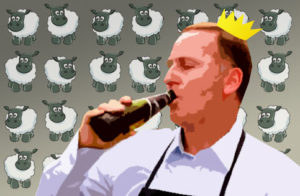
Million of lines will be written about John Key’s shock resignation today, and most of them will be about the impact of this event on business and politics. For New Zealand’s 400,000 cannabis users, most of whom are already disadvantaged, the concern is more whether Key’s resignation will herald a shift to a sane and humane drug policy in New Zealand.

The National Party neglected its duty of care to the youth of New Zealand. Although the Baby Boomers generally cashed in royally on the booming house prices, the youth of New Zealand found themselves paying for those same increases in their rent and bigger debts.

For those young and poor, the Key era was more like an inquisition. Funding for rape crisis centres was slashed, cannabis prohibition was enforced as aggressively as ever, and access to financial help was restricted, mostly to pay for tax cuts for wealthy old people.

In fact, it could be argued – if somewhat cynically – that the purpose of National Party policy, especially on the drug front, is to destroy the young for the sake of the profits of the rich.

Not only was John Key strongly against even having a discussion about drug law reform, he even appointed the most aggressively anti-drug MP in Parliament, Peter Dunne, to the position of Associate Minister of Health, from where he was able to block all efforts for drug law reform.

John Key didn’t seem to have a problem with Dunne’s hamfisted efforts to ‘fix’ New Zealand’s archaic drug laws. He stood to one side when Dunne opened up the borders to Chinese legal highs of completely unknown origin. Even when reports of mental health casualties poured in from all corners, Key refused to criticise the blundering Dunne.

When Dunne brought in the disastrously flawed Psychoactive Substances Act, John Key voted to make it law, all the while ignoring the cries of thousands of Kiwis who have discovered medicinal benefit in cannabis. New Zealand was 12 years behind California on medicinal cannabis law reform when Key came to power – now we are 20 years behind, and still not a hint of progress.

No doubt the mainstream media will, in coming weeks, join in a chorus of “Rockstar, rockstar!” as they prepare New Zealanders to support globalist forces in the 2017 General Election.

Outside of the mainstream, and away from the arse-licking sycophants who have a corporate platform, Key will be remembered with bitterness for a long time.

Bill English, Key’s anointed replacement as Prime Minister, is also an old dinosaur, but he is known for being something of a pragmatist. In any case, chances of any meaningful change before the 2017 Election is extremely unlikely.

The best one can realistically hope for is that, with the resignation of a man who was like Torquemada to medicinal cannabis users, the country can finally have the long-suppressed rational conversation about drug law reform.

Once that happens, it’s simply a matter of time until the collective realisation dawns that cannabis prohibition must be repealed.

Gutless Government Washing Its Hands of the Victims of Its Drug Policy

syntheticcannabis

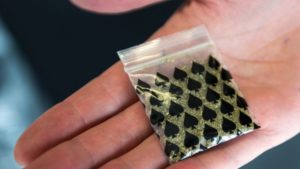
Damage from legal highs use is booming in Christchurch, and the Government has washed its hands of the human casualties.

Peter Dunne has said that nothing will happen until a review of the Psychoactive Substances Act in 2018, meaning that the door is closed to further drug law reform until after the next election (when Dunne might well be gone).

This newspaper pointed out at the time that the purpose of the Psychoactive Substances Bill was to delay drug law reform as long as possible. This warning went unheeded by the moronic sheep in Parliament, who rolled over on their backs and passed it with their full support.

So it looks as though Peter Dunne, the whore of the tobacco and alcohol industries, has successfully stymied all drug law reform for the nine years of National’s three terms.

Remember when the mainstream media was heralding this criminal as a drug law reformer on the basis of a few words in a speech in Vienna? They’re still puking out Government propaganda, this time calling the drugs “synthetic cannabis.”

Has anyone, in the history of New Zealand, done more damage to the youth of this country than Peter Dunne, who not only brought the plague of legal highs upon Kiwis but propped up a Government that slashed mental health care funding?

With Dunne’s support, the National Party withdrew funding to assist the same mental health casualties they themselves had created through allowing legal highs over cannabis. Dunne is symbolic of a conservative Government that has washed its hands of the very same human suffering that it has created.

The linked Stuff article cites District Court Judge Jane McMeeken, who, typical of the Baby Boomer generation and their complete lack of imagination, says “No easy answers existed on how to stop people using synthetic cannabis. Prohibition did not appear to have worked.”

Any idiot knows that legalising cannabis would remove, at one stroke, most of the demand for legal highs. In Colorado there is no market for legal highs, and nor is there one in the seven other American states that have now legalised cannabis.

Why do we continue to let our youth suffer from the plague of legal highs when, on the other side of the Pacific Ocean, the entire American West Coast has now legalised cannabis?

Why are the Tribal Huk More Effective Than the New Zealand Government?

jamiepink

Frustrated by the feeble responses from local law enforcement to requests for help cleaning out crystal methamphetamine dealers from their community, a street gang made up of mostly underprivileged youths takes the problem into their own hands with immediate and complete success, decommissioning a dozen meth houses within 24 hours. Something from the fringes of a dystopian cyberpunk novel like The Verity Key, set in the 2070s? No – this is the small rural Waikato town of Ngaruawahia, population 5,000, in 2016.

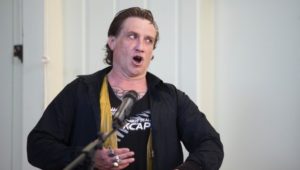
Achieving this was possible because the locations of and locations from which the dealers sold were all known. All it took was a public meeting organised by Tribal Huk President Jamie Pink (pictured above), at which he stated that crystal meth dealers had 24 hours to leave Ngaruawahia or they would be physically removed from the town.

This throwing down of the gauntlet has apparently resulted in a town free of dealers of the drug. The question then becomes: why could the Police not have done this?

The least secret reason is that the Police are the army of the rich, and the residents of Ngaruawahia do not make large tax contributions to the upkeep of the New Zealand Police force. Like all poor communities, therefore, they are of the lowest priority for protection by law enforcement.

Moreover, the rich generally do not have problems with P dealers making offers to their sisters and daughters as the rich drink alcohol.

The main reason, however, is this. The Tribal Huk actually has more community support among the disadvantaged than the New Zealand Police. This is a fact widely known and accepted by the poor whose neighbourhoods house the crystal meth dealers, and is much less understood by the wealthy.

The Police are not considered by the poor to be on their side because they put the poor in prison for cannabis offences, and because they give the poor car fines to keep the roads clear for the rich.

The opposite situation occurs in places where cannabis is not illegal and where the Police are properly funded through adequate taxation, such as the Netherlands. In the Netherlands, cannabis users (the proportion of whom in the population is less than 40% of the New Zealand figure) have no inherent reason to distrust the Police as their possession of cannabis is not a crime.

In New Zealand the Police are like an occupying army if you are a cannabis user. Distrust is the natural consequence of the accumulated fear brought on by the possibility that the Police might aggress against you in the enforcement of cannabis laws.

This community support might be a result of the Tribal Huk’s successful ongoing efforts to feed over 500 Waikato schoolchildren, something that the Ministry of Education has not been able to achieve. The Tribal Huk deliver their sandwiches to 25 different schools within the region.

There are no national food in schools programs in New Zealand because we don’t want to pay taxes to feed other people’s kids. There is not sufficient solidarity in New Zealand for such a thing to be acceptable.

Pink himself, in the article linked above, refers to the link between feeling hungry and feeling angry, something that is obvious to any poor child but is a lesson from another dimension to the crusty, distant old men who make decisions in this country.

Anyone with any sense knows that if you are a hungry child, being told to sit down in a classroom on concentrate on anything other than food is going to make you angry. Few adults could handle such a thing without anger.

And yet, despite a full stomach being absolutely necessary if a child is going to learn anything meaningful from school, the New Zealand Government has failed to provide something as simple as sandwiches.

Perhaps the Tribal Huk should have some Police and Ministry of Education funding diverted their way?

The conclusion appears to be that government works best when there is sincere mutual support with the people it governs, and the precise structure or ideology of that government is, next to this, unimportant.

Another way to put this is that government will only work when there is sufficient solidarity between the people being governed and the people doing the governing, and this is true whether the power structure involves the State or a local street gang.