The Naturalistic Fallacy and Consciousness-Altering Drugs

A great and famous observation in philosophy is known as Hume’s guillotine, and it can be found “In every system of morality, which I have hitherto met with” (Hume’s words). This observation is that people aren’t very good at describing reality as it is, but rather seem to prefer to describe it as it ought to be.

This general confusion of how things are and how they ought to be has led to all manner of incorrect thinking. One assumption, when applied to drugs in general (not just drug law in particular) seems to be that the human mind works most rationally and correctly when not under the influence of any external drugs – which is, as this reasoning glibly assumes, its ‘natural’ state.

An implication of this assumption is that any person under the influence of a psychoactive drug is ‘high’ or ‘intoxicated’ and thus cannot be trusted to do anything at all competently, perhaps not even verbally describe reality or their own will.

As any psychonaut can tell you, this is complete shit.

For one thing, we are almost always under the effects of one psychoactive drug or another. At any one point in time, close to half of us are either somewhat drunk or somewhat hungover, most of us have a least a buzz going from a solid dose of caffeine at some point in the morning or a haze going from a sleeping pill at some point in the evening, about a quarter of us smoke tobacco, and over a third of us are under the effects of psychoactive medicine prescribed by a doctor.

We’re never clean – so how do we know it’s better?

Secondly, there are already powerful psychoactives that are natural, and our brains are full of them. Our brains are naturally a store of psychoactive chemicals called neurotransmitters, of which there are over 100 known.

Some of them are well known, such as adrenaline. Yes, the rush you get from fighting or from nearly being killed is literally just a drug rush: adrenaline binds to adrenergic receptors, which causes the blood flow to heart and lungs to increase and the muscles to surge with energy in preparation for possible mortal combat.

Few would argue that this burst of manic energy, which often brings with it cerebral haemorrhages and heart attacks, could possibly be more healthy than smoking some Northern Lights and relaxing for the evening. But some will.

Thirdly, there are many ways of altering consciousness that don’t even involve psychoactive drugs. There is music, meditation, physical exercise, and if one has never altered consciousness from making love one simply hasn’t done it right.

If it’s possible to significantly alter consciousness by ‘natural’ means then it can hardly be argued that sobriety is itself natural. Indeed, the idea that humanity’s natural state is to wallow in mind-rotting tedium is probably a masochistic artifact of Abrahamic influence or a consequence of the brainwashing that was done to condition people to industrial era labour.

A fourth and final point is that in some cases the human mind demonstrably works better when influenced from the outside. When a child is born, the act of nursing and being nursed releases oxytocin in both mother and baby.

Oxytocin is known as the “love drug.” Large doses of it in the brains of females while making love will induce them to favour a monogamous pair bond with their partner. This neurotransmitter appears to play a role in all kinds of emotional bonding and interpersonal solidarity, as it is released by pleasant physical contact like being caressed or stroked and brings with it a reduction in anxiety and fear.

The baby needs this release of oxytocin in order to be healthy, because, without it, they tend to develop to be suspicious and cold, probably because they have internalised a moral value that the world is a place where no-one really cares about each other.

Thus it can be seen that, in some cases, a drug that requires an external influence is a natural part of the human experience as a consequence of humans evolving as a mammalian, and thus social, species.

All of these arguments taken together suggest that the received wisdom of “Drugs bad no drugs good” is not only far from the truth but could be dangerously counterproductive.

There is actually a lot of merit to the counterargument. Looking at the drug intake of most of our greatest cultural icons demonstrates clearly that the unique and original thoughts common to many drug experiences is a powerful facilitator of creative achievement.

Understanding New Zealand: Cannabis Law Reform Voters

With the news that the Greens have more or less adopted the ALCP policy from the 2014 Election, there is a sudden interest in the sort of person who might be attracted to vote Green on the basis of this policy. In this specific instance, there’s one obvious and decent-sized demographic: actual ALCP voters from 2014, who were 10,961 in number.

So who are they? Well, they’re very clearly not the same sort of person who would vote National. The correlation betwen voting ALCP in 2014 and voting National in 2014 is -0.70. This is not at all surprising as the entire point of the war on drugs was to destroy the enemies of the conservative establishment.

Neither are they likely to vote ACT (-0.45) or Conservative (-0.54). These three correlations are fairly hefty, which tells us that the average cannabis law reform voter has a considerable level of apathy for conservatism and for right-wing politics in general.

Naturally, these correlations are the opposite on the left. Voting for the ALCP in 2014 and voting Labour in 2014 had a correlation of 0.38. For Internet MANA it was 0.76 and for the Maori Party it was 0.85.

Two correlations stand out against this easy narrative of ALCP voters primarily being leftists. They are the correlation between voting ALCP in 2014 and voting Green in 2014 (0.02) and with voting New Zealand First in 2014 (0.57).

The lack of a significant correlation with the Green Party vote might surprise many. It seems to be a natural assumption that, because the ALCP policy in 2014 was always more likely to be picked up in the future by the Greens than any other party, that a strong correlation ought to exist. The reality, however, is that the Greens and the ALCP have hitherto appealed to very different demographics.

The Greens have, since at least a decade ago, deprioritised their cannabis policy in favour of all kinds of trendy issues that appeal mostly to middle-class urban elites. This explains why the correlation between voting Green and Net Personal Income is 0.31, so much more positive than the correlation between voting ALCP and Net Personal Income, which is -0.40.

Not only do ALCP voters come from the other side of the socioeconomic spectrum to Green voters, but they are also much browner. The correlation between voting Green in 2014 and being Maori is (an insignificant) -0.09; for voting ALCP in 2014 and being Maori it is a whopping 0.89, one of the strongest correlations in this entire dataset.

This also explains much of the high correlation betwen voting ALCP and voting New Zealand First. The correlation between voting New Zealand First and being Maori is 0.66. Everyone who has ever met more than a few Maoris will have caught on to the popularity of cannabis within Maori culture, and it’s not surprising given the differential in how hard the law hits them that Maori are much more likely to cast a vote for cannabis law reform.

Few will be suprised that voting ALCP has a very strong negative correlation with turnout rate in 2014: -0.68. This is, however, only slightly worse than Labour’s correlation with voting of -0.67. So it’s less to do with lazy stoners and more to do with the general disenfranchisement of those who the system does not represent.

Cannabis voters have a moderate tendency to not be religious: correlations with voting ALCP in 2014 and being Christian, Buddhist or Hindu were -0.41, -0.52 and -0.40 respectively. Mirroring this was a correlation of 0.34 with having no religion. The odd statistic here was the sizable correlation between voting ALCP and having Spiritualism for a religion: this was 0.36.

If cannabis voters are poor, Maori and non-religious, it’s probably not surprising that they’re also young. Voting ALCP in 2014 had a hefty correlation of -0.55 with Median Age, which suggests that most of the people voting on the basis of this policy are young.

Perhaps the most interesting idea from all of these statistics is that the Greens might be winning votes with their new cannabis policy at the expense of New Zealand First voters. It’s apparent that many young Maori vote ALCP out of levity in their first election and then, as they age and become less radical, come to see the merit in voting New Zealand First. The Greens would be chiefly targeting these voters with their new cannabis policy.

If the Greens are making a serious push for cannabis voters again they may find that the demographics have changed since the last time they tried it, in 1999.

*

This article is an excerpt from Understanding New Zealand, by Dan McGlashan, published by VJM Publishing in the winter of 2017.

Estimating the Electoral Impact of the Greens’ New Cannabis Policy

The Greens have taken their sweet time in updating their cannabis policy to something reasonable, and this newspaper has not shied from criticising them for dragging their heels. But today they did update it – and this update has electoral ramifications worth considering.

The updated drug law policy seems to be the responsibility of Julie Anne Genter (whose sponsored FaceBook posts you may have seen recently if you were in enough cannabis-related groups). This is her first major effort since assuming the role of Greens Health Spokesperson from Kevin Hague.

Most encouragingly, in an interview about the new policy Genter made a reference to Canada and the USA, in particular the Western seaboard closest to New Zealand. It’s in Colorado, Washington, Oregon and California that cannabis prohibition was repealed by referendum and in Canada that it is in the process of being repealed by a party that ran explicitly on the issue in a General Election.

She also used a couple of arguments straight out of the Cannabis Activist’s Handbook: that cannabis law reform was a similar sort of deal to gay marriage in that the herd was against until until it had had a few decades to think about it and that legalisation would make it harder – not easier, as it is considered by some – for young people to get hold of it because of the current lack of ID checks on the black market.

The Aotearoa Legalise Cannabis Party has made a point of using the example of Colorado to suggest what a sane cannabis policy ought to look like. So if the Greens are signalling that this is also their long-term vision, then they ought to count on collecting votes from people who think along similar lines.

The ALCP scored 0.46% of the vote in the 2014 General Election. This isn’t much but it’s a lower limit on what the Greens might expect to gain from this policy.

All of these people were willing to drag themselves to the polls to vote for a party who had no realistic chance of making a difference but who did intend to make noise about the cannabis law, so it’s likely that the vast majority of people willing to vote for the non-Parliamentary ALCP would be willing to vote Green now that the Greens have a similar cannabis policy.

This newspaper estimated last year that the true amount of support for the ALCP was probably closer to 1%, based on the increase in support for reform to New Zealand’s drug laws since 2014 (change has been very rapid on this front). The Greens can count on most of those.

On top of that, one has to factor in all the people who would have voted for such a policy in 2014 had a major party supported it, as one now does.

These people are probably as least three times as numerous as those who voted ALCP in 2014 or were intending to do in 2017.

It’s interesting to note that voting Green in 2014 and voting ALCP in 2014 has a correlation of only 0.02. This is because Green voters tend to be white and wealthy whereas ALCP voters tend to be poor and Maori.

Voting ALCP in 2014 had a correlation of -0.40 with Net Personal Income, which suggests that cannabis voters are poorer than all but Labour, Maori Party and New Zealand First voters. Voting Green in 2014 had a correlation of 0.31 with Net Personal Income, which means Green voters are almost wealthier than average by as much as the average cannabis voter is poorer than average.

Implicit in these statistics is the potential for the Greens to attract a large number of new voters, especially those who didn’t vote in 2014, as the anti-cannabis brainwashing has been least effective on those who are already disenfranchised, such as Maori, young people and the mentally ill, and these traditionally low-voting groups now have a reason to reconsider.

These statistics suggest that there are many New Zealanders who have only just now started to hear the Green Party tune as the party seeks to expand outside of their traditional wealthy, white urban strongholds.

It’s easily possible that this new policy will result in 2% extra votes for the Greens on Election night 2017, because of the immense degree of disenfranchisement suffered by cannabis users before today. This alone would result in two extra seats once they were all dealt out.

After all, there are 400,000 cannabis users in New Zealand and our options, until today, were terrible.

Why Are Psychiatrists Allowed to Violate the Bill of Rights Act in New Zealand?

electroshock

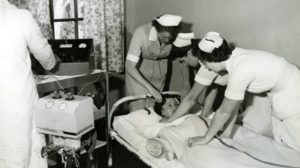
Giving someone medical ‘treatment’ against their will and very arguably to their own long-term detriment is explicitly forbidden under Section 11 of the New Zealand Bill of Rights Act. Despite this, it happened on at least five occasions last year in New Zealand with electroshock therapy alone. How?

The answer lies in the Mental Health Act. Specifically Section 60, which allows a psychiatrist to override the Bill of Rights Act if they feel that it’s in the best interest of the patient.

Note that the will of the patient is considered a non-factor here.

Note also that a short few centuries ago, people were burned at the stake because authority figures decided that it was in the best interests of their immortal soul. Have we really come out of the Dark Ages? One suspects that the people getting electroshock therapy despite having explicitly refused consent may be inclined to think not.

Section 59.4 of the Mental Health Act reads: “The responsible clinician shall, wherever practicable, seek to obtain the consent of the patient to any treatment even though that treatment may be authorised by or under this Act without the patient’s consent.”

Who decides what is practicable? Certainly not the patient – and here the problem lies.

If treatment may be authorised without the patient’s consent by the Mental Health Act then the Mental Health Act overrides the Bill of Rights Act in New Zealand.

There’s only one reasonable conclusion to draw from this: mental health patients are lower than criminals in our society.

This proposition can be supported with a little thought.

It’s a common experience for a mentally ill person to come into contact with a system that refuses to help them, especially if that person’s illness makes it difficult to hold down a work schedule (or to work full stop) and so they need financial assistance.

Even worse, there is no obligation whatsoever on the part of the mental health services to make sure that the people who come to them for help are treated fairly.

Complaints against abusive mental health practitioners are usually treated with the same stonewalling as complaints against soldiers or police officers. Once a person is diagnosed with a mental illness, any allegation of abuse they make is simply written off as a delusion.

Contrast this state of affairs with what happens if a person chooses of their own free will to chop the head off another human being and rape the corpse.

In the case of such a grisly, senseless rape-murder, that murderer will be provided with a lawyer to guide them through the whole process of arrest, detention, custody, trial, sentence and aftermath, making sure that at each step they are fully aware of their rights. That lawyer, who will be provided to a murderer for free if they have no money, will ensure that nothing untoward happens to his client at any point.

If the murderer doesn’t like the punishment handed down for his act of murder he has the right to appeal to a higher court (his lawyer will naturally advise him at length here).

And if justice is still not done to the murderer’s satisfaction, there are Supreme Courts to help him, Ombudsmen, Police Complaints Authorities etc.

There is nothing like that for mental health patients in New Zealand. If you need a benefit because you are in an advanced state of psychosis and don’t want to starve to death in the meantime, you have 30 minutes with a psychiatrist and if you can’t convince them in that time it’s fuck off and die for you.

No appeal to a higher authority, no-one advising you of your options, nothing. Just out onto the street to fend for yourself, even if you’ve paid taxes for many years. The assumption seems to be, then, that you were just a parasitic malingerer trying to bludge a benefit.

In New Zealand it’s easier to find a doctor to perform electroshock therapy on a patient who has explicitly withdrawn their consent (five cases known in 2015) than it is to find one who will help their patients acquire medicinal cannabis (zero cases known in 2015).

That’s a sobering thought to anyone who believes the healthcare system is looking out for them.

If you want another, think that all the New Zealand has to do to destroy anyone deemed a thought criminal in 2016 is to find a psychiatrist who agrees and that psychiatrist will have the legal right to destroy that thought criminal’s mind with ‘medication’ or ‘treatment’ that could have any desired effect out of all the neurological reactions known to human biochemistry.

One of the best understood of which is sedation.

The thought criminal could be placed on a medication such as Olanzapine, a heavy enough dose of which will slow down the mind of the patient/victim to such a degree that stringing together ‘subversive’ thoughts would simply not be possible. This ‘chemical lobotomy’ is how people are silenced nowadays, now that physical lobotomies are illegal.

Giving someone electroshock therapy when they have explicitly refused treatment is as barbaric as the corrective rape practiced in Africa to try and ‘cure’ women of lesbianism.

It’s a very sad state of affairs when mentally ill people cannot have any confidence that the system they need to ask for help actually intends to help them. Yet, that is the state of affairs in New Zealand today.