The Case For Cannabis: Cannabis is a Tool For Personal Growth

The cannabis high can teach a person a lot about themselves that they didn’t already know. It brings up a range of different emotions, and some of those emotions provide the sort of challenges that lead to healthy personal growth. This article discusses the idea that cannabis ought to be legal for its benefits as a tool for personal growth.

Personal growth can occur in a number of areas. For those who have suffered previous life trauma, it’s common that personal and emotional development stalls at the stage where the trauma occurred. Heavy physical, sexual or emotional abuse can lead to impulsive, neglectful, destructive behaviour, and getting past such conditioned behaviours is not easy.

The main use of cannabis for psychotherapy might lie in its ability to induce a state of relaxation and fearlessness. In that state, it’s possible to revisit earlier traumas and to reinterpret them. Traumatic events tend to leave the impression that they were more important than they really were, which can lead to them making a change to behaviour that outweighs any learning value the experience may have had.

A person may have become conditioned to react angrily or violently when confronted with a certain emotion or stimulus, when they really shouldn’t. In order to correct this, psychotherapy seeks to revisit the traumatic event and recondition the patient to not react with anxiety when they recall it. This has the effect of settling the psychological tension that had existed ever since the trauma.

Cannabis is useful for its deconditioning effects – although this is also one of the reasons behind why it has been illegal. One man’s psychological damage is another man’s asset, and the brutal learned helplessness that people come to suffer as a result of early schooling tends to make them more amenable to instruction from their overlords in the workplace. Those overlords, therefore, do not want people to decondition themselves, especially if it also makes them free.

Probably the most effective use of cannabis, however, lies in its ability to cause the user to have original thoughts that could not have been generated by any other method. Cannabis has long been associated with creative industries and endeavours, especially music and writing. It does this by preventing repetitive thoughts from occurring, leaving mental space for ideas inspired by the environment.

There are several people whose minds are limited on account of the low range of stimuli they have encountered over the course of their lives. Many of these people, particularly, have been dumped in front of a screen by a parent early in their lives and know little of the outside world or of other people. They have essentially been programmed to accept Disneyland as their reality.

People like this can bring themselves a new lease on life by using cannabis, and allowing themselves to explore vistas of the mind that were previously shut off. As users will attest, entire realms of new thought can open up when one is under the influence of cannabis: all sorts of strange, wonderful and unsettling ideas seem to arise as if from a parallel dimension that one could not perceive until just now.

Related to this, and as mentioned in a previous section, cannabis is a religious and spiritual sacrament. This entails that many people have used it as a tool for spiritual growth.

There is a reason why hippies are associated with terrifying insights into the nature of death, consciousness and reality as well as cannabis – they have seen beyond. Cannabis use can lead to spiritual growth in the same way that meditation does. By way of breaking one’s usual patterns of paying mental attention to petty things, one frees up mental space for new and original thoughts to arise, perhaps from long-suppressed places.

On a darker level, the unpleasant and paranoid aspects of the cannabis experience can lead to personal growth in a grim, meathook sense. Many people have avoided ever really thinking about the fact that they’re going to die, thanks to all the conditioned patterns that come with living an everyday life. So when a person does, perhaps for the first time ever, it’s common for them to feel extremely challenged by it.

Cannabis law reform ought to happen so that cannabis can be used as a tool for personal growth. There are both therapeutic, recreational and spiritual benefits that cannot be explored under prohibition.

*

This article is an excerpt from The Case For Cannabis Law Reform, compiled by Vince McLeod and due for release by VJM Publishing in the summer of 2018/19.

Why You Can Never Know if Another Person is an NPC, And What This Means

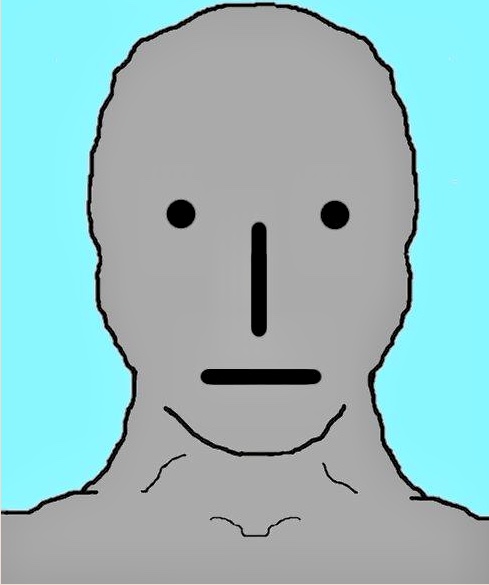
Much recent interest has been devoted to the idea that a significant proportion of other human beings might be “NPCs” (non-player characters). What is meant by this is that “the lights are on but nobody’s home” – that the person is not conscious, despite appearing to be. As this essay will discuss, this philosophical problem has a number of chilling interpretations.

When people decry others as NPCs, what they are really saying is that these people are not conscious. There might be bodies moving around and saying and doing things, but there is no conscious observer that pays attention to the lived experience of such bodies. Individual NPCs might just as well be androids of some kind, machines that replicate the functions and actions of conscious beings without actually being such.

The reason why recent interest has attached to this idea is that some people seem to be utterly incapable of thinking for themselves.

Certain political issues have made it apparent that a large proportion of voters do not think about reality at all. They are happy enough to adopt wholesale a Weltanschauung from the television and from their peers. This is especially true if a person adheres to one or the other side of the mainstream political spectrum, but a political allegiance isn’t necessary. Many people’s heads seem to be more or less empty: they simply repeat whatever has been pumped into them from the outside.

This has led others to wonder if there’s anyone really in those heads at all. These apparently unthinking people might be NPCs: essentially meat-puppets that look and sound like humans but which have no conscious will, and who therefore are incapable of creative direction. They can only follow orders like drones, whether those orders come from other humans (PCs or NPCs), the Government or the television. They are therefore categorically different to those of us who are conscious.

But this line of reasoning opens up some extremely thorny philosophical questions.

Primary among these is that you can’t measure or detect consciousness empirically. Consciousness is a state of being aware, and this is impossible to measure because awareness cannot be detected by any instrument. A materialist will object that it is possible to measure responsiveness, and this can be done with (for e.g.) EEG machines that can tell whether a person is awake – but these measures are always of purported correlates of consciousness, not consciousness itself.

We seem to intuitively believe that being “awake” is somehow linked to being conscious, but the simple fact is that we are also conscious of experiencing dreams, and are therefore also conscious even when asleep. Therefore, our intuitive perceptions about who is conscious are not necessarily accurate. It may be that the common perception that all humans are conscious is erroneous.

One can be aware of one’s consciousness, of course. This is logically trivial: if one is conscious of anything at all, then one is conscious. Therefore, if you’re even aware of yourself asking the question of whether or not you’re conscious, you must be. Although, because one’s own consciousness cannot be measured any more than that of other beings can, its presence cannot be proven to anyone other than oneself.

It really seems that the only way consciousness can be sensed in others is by means of some intuition. It certainly seems as if consciousness can be detected in others; at least, this seems intuitively true to most people. This is the basis of the NPC phenomenon: by whatever means this intuitive decision is made, a person decides that another person is either conscious or not.

The difficulty then arises: is it true that all other humans are conscious, or only some? Because not everyone necessarily agrees. Some argue that only their race is conscious, and that others are some kind of ‘bugmen’. Others argue that only members of their religion are conscious, because only these have been “infused with the light of God” or similar. Yet others argue that only members of their class are conscious, and that the poorer someone is, the more like an animal.

The obvious problem with this way of thinking is that it leads to asking questions like: if other races/religions/classes are not conscious, why not just wipe them out for the sake of securing a better position for our own? It’s clear to anyone who has studied World War II that the dehumanisation of other people, by way of declaring them less conscious, can easily lead to bloodshed and genocide. This is why the vast majority of people have adopted the unspoken assumption that all other humans are conscious.

Even if all humans are declared conscious, one must then ask if all other beings are conscious, or only some?

Another thorny philosophical question is moral: if another individual is an NPC, and therefore not conscious, is it immoral or not to exploit that individual? One the one level, it seems like nothing should be different, but on another, it could be argued that if nothing is aware of any injury caused to the physical body then it isn’t really suffering. Therefore, harm done to beings that are not conscious is not immoral (unless those beings are the property of someone else).

Because you can never really know if another person is an NPC, the default response seems to be to assume that no-one is, i.e. that all other people are conscious and that their suffering is meaningful. This is certainly the approach that a courtroom will take if you beat up someone because you think they are an NPC. But you can’t ever really be sure.

*

If you enjoyed reading this essay, you can get a compilation of the Best VJMP Essays and Articles of 2017 from Amazon for Kindle or Amazon for CreateSpace (for international readers), or TradeMe (for Kiwis).
Te Reo With Mnemonics: Law and Justice Words

Law – ture

As if from two suns, two rays of light shine from the heavens onto a book of law.

Court, to judge – kōti

Inside a courtroom, a judge watches two peacocks courting.

Prison – whare herehere

A ferry crosses the Cook Strait. There is a prison built on top of it, full of hairy prisoners. It is the ferry hairy hairy.

Prisoner – herehere

Looking at a prison yard, it can be seen that the prisoners are covered in both facial and body hair. To be a prisoner is to be hairy-hairy.

to arrest – mauhere

A naked, hairy man is mowing the strip outside his house. He is the mow hairy. The Police come and arrest him for public nudity.

Police – pirihimana

From a boat on the Amazon, people can see in the water of the river tiny policecars swimming like pirahnas.

The Māori word for ‘Police’ – pirihimana – shares a ‘pi-r-h-na’ construction with the English word ‘pirahna’

Crime, Criminal, break the law – hara

A man points and says “Hey, that guy’s breaking the law!” His anarchist friend cries out “Hurrah!”

fair – matatika

A man wipes his feet on a mat and it rises up and attacks him. He cries out “Be fair! Be fair!” as he suffers the mat attack.

Justice – manatika

A woman goes into her attic and sees a bunch of men she did not expect. It is now a man attic. She comes down crying “Justice!”

Punishment – whiunga

The judge says “Your punishment is a $100 fee.” The guilty man walks despondently up to the clerk to pay, and his niece is there. She says “Fee, Uncle?”

Right – mōtika

A woman steals a moustache off a man’s face. When he complains, she says “It is my right – I am the mo taker.”

unfair – makihuhunu

A man walks up to a table and takes a key from it. Another man already sitting there says “That’s unfair! That’s ma key!” “Huh? Who knew?” the first man sneers as he walks away, unfairly.

*

The above is an excerpt from the upcoming Learn Maori Vocabulary With Mnemonics, by Jeff Ngatai, due to be published by VJM Publishing in the summer of 2018/19.