

We Don’t Need a Cannabis Referendum – Just Legalise It

Conducting a referendum about a liberty that should already be guaranteed by human rights legislation has proven to be highly divisive in Australia

Kiwi cannabis users have been buoyed by the demise of the Fifth National Government. It is already clear from the change in rhetoric that the incoming Sixth Labour Government will approach the issue with honesty, in contrast to the John Key/Bill English/Peter Dunne approach. However, honesty doesn’t prevent one from making errors – and the decision to hold a referendum about legalising the personal use of cannabis is one such error.

It’s widely accepted that the actions of the New Zealand Parliament in passing gay marriage legislation was a wiser, less divisive move than the actions of the Australian Parliament in holding a referendum on the subject. The Australian experience of having a referendum on such an emotive subject was that the country tore itself in two, with many people eventually choosing to vote against gay marriage out of sheer bitterness and resentment.

The New Zealand experience of making it legal by Parliamentary decree gave the country an opportunity to come together in mutual desire to right the wrongs of the past. Even conservatives like Maurice Williamson saw the need to give a passionate speech in favour of a law change, and the Parliament itself went as far as singing a song out of a will to demonstrate that the old days of hate were over.

It’s also widely acknowledged – by the New Zealand people, if not by the New Zealand ruling classes – that withholding cannabis medicine from sick people who need it is an extremely cruel thing to do, and something only done because of hate. Certainly it’s much crueler than withholding marriage rights from people, which, while inconvenient, are hardly a matter of life and death or daily suffering and misery.

Moreover, it’s obvious from the experience of the half a dozen American states that have already legalised the recreational use of cannabis that the downsides of doing so have been massively overstated for decades. The predicted crime explosion and spates of suicides never eventuated – indeed, some research suggests that suicide rates can drop by almost 5% in the wake of legalising medicinal cannabis, and this rises to almost 10% in the cases of young males.

So why not just do the obvious thing, acknowledge the evident truth, stop lying and just make the personal use of cannabis legal by Parliamentary decree, as the Labour Government intends to do with medicinal cannabis?

This way we can avoid giving a platform to moronic bigots like Bob McCroskie to further divide our society with fearmongering and lies. The Australian equivalents to McCroskie have polluted media space with hysterical predictions of doom, further alienating gay people from the mainstream, and the same will happen in New Zealand if we also put a question of basic human rights to referendum.

Ultimately, no-one has the right to prevent anyone else from using cannabis. No-one has the right to take this freedom away from other people, any more than they have the right to prevent them from watching cricket or eating parmesan. Therefore, there is no good reason to have a referendum about whether it should be legal or not, because there’s ultimately no good reason to obey any law prohibiting the use of cannabis.

Our law should simply reflect this reality and make it legal.

*

Vince McLeod is a former Membership Secretary of the Aotearoa Legalise Cannabis Party and author of the Cannabis Activist’s Handbook.
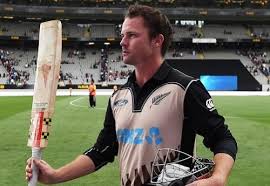

New Zealand in India ODI Series 2017, First ODI Preview

Colin Munro’s T20 form has seen him elevated to open for the ODI side in the hope that he can replicate Brendon McCullum

A lot of things are going against the Black Caps before their One Day International series against India in India starts tonight (Sunday) at 9p.m. NZT. Ominously, India sit atop the ICC ODI team rankings table, equal to South Africa with 120 ratings points, while the Black Caps are currently a mid-table side at 5th. Worse, the matches are in India, where India just demolished the world champion Australia side 4-1.

On the other hand, a lot is going in their favour. New Zealand scored 343/9 in their last warm-up match against an Indian Board President’s XI, with centuries to Ross Taylor and Tom Latham, who in all likelihood will comprise the 4-5 axis over the series. Considering that Kane Williamson will bat at three, this suggests that India might have difficulty bowling the Black Caps out.

Colin Munro is expected to open the batting with Martin Guptill, which is an experimental measure intended to fill the gap left by Brendon McCullum at the top of the order. McCullum’s explosive starts made it possible for Williamson and Taylor to build innings without risk, and Munro has a T20 strike rate of close to 150 – close to what McCullum was striking at for the last 2 years of his ODI career.

It looks as though Williamson will try and get 10 overs out of Colin de Grandhomme, who will bat 7, and with Latham at 5 doing the wicketkeeping this leaves a spot for a pure batsman at 6. This spot might get filled by Henry Nicholls, as it was during the final warm-up match, or the Black Caps might start playing hitters from there, which would probably mean Glenn Phillips.

The other question mark is whether or not Tim Southee is still good enough to command a starting spot in this ODI squad. Although he has been a first-choice seamer for a handful of years, his ODI bowling average over the past three years – which includes the great run at the 2015 Cricket World Cup – is 36.47, which is only good enough for 33rd place on the official ODI bowling rankings.

Damningly, there are four players from Afghanistan alone higher than Southee on the official rankings, which is probably not good enough for a Black Caps side that made the final of the last Cricket World Cup and is aiming to go one better in England in 2019.

It’s very possible that the Black Caps play two spinners on the slow Indian decks, which means they take both Mitchell Santner and Ish Sodhi. Assuming then that they still need de Grandhomme at 7 for the sake of the batting, and that Trent Boult is undroppable, that means Southee will be competing with Adam Milne and Matt Henry for that second seamer’s position.

India, for their part, have two extremely crafty bowlers. With the new ball is Jasprit Bumrah, who isn’t quick but has a Nathan Bracken-style range of subtle variations that make him hard to hit off the square, and with the older ball is Axar Patel, whose wily orthodox is also a difficult proposition on Indian surfaces.

The likely winning of the game, however, will be in India’s power-packed top order. They have four batsmen ranked in the top 14 in the world, with two of them – Virat Kohli and Rohit Sharma – ranked higher than Kane Williamson. Kohli averages a monstrous 55.13 from almost 200 matches, and getting rid of him early is simply a necessity if the Black Caps are to win.

Alongside them are the silky skillful Ajinkya Rahane and the brutal Shikhar Dhawan at the top and MS Dhoni with his 50+ average down the order. India have also found a genuine allrounder in Hardik Pandya so have no obvious weaknesses anywhere.

The Black Caps are only playing three ODIs and they are paying $3.80 on BetFair to win the first one, compared to India’s $1.35. This suggests that the market is expecting a 2-1 or 3-0 win to India.

Cannabis Law Reform Appears Imminent Under The New “Afghanistan” Government

The Afghanistan flag is black, red and green, like the alliance supporting the Sixth Labour Government

A black-red-green “Afghanistan” coalition has replaced National in the halls of New Zealand power, and so the absolute, mindless refusal of the outgoing National Government to countenance any kind of cannabis law reform is now no longer relevant. This means that the wasted decade might be at an end. This article looks at the prospects for cannabis law reform over the next three years.

Labour had already pledged to introduce medicinal cannabis within the first 100 days of taking power, at least to “people with terminal illnesses or in chronic pain”, but questions remain.

It isn’t yet clear what definition of medicinal cannabis Labour intends to use when they change the law. What constitutes “medicinal” use of cannabis is a subject of considerable debate, not least among medical and mental health professionals. That it could be prescribed to people with terminal illnesses seems straightforward enough, but what qualifies as “chronic pain” could vary from a small number of acute conditions on the one hand, to a California-style wide range of ailments on the other (California has had legal medicinal cannabis since 1996).

The best outcome for cannabis users would be that the Labour Party adopts the same definition of cannabis, and treats cannabis the same way, as in Julie Anne Genter’s medicinal cannabis bill, currently before Parliament. This bill contains a very broad conception of medicinal cannabis and provides for users to grow their own medicine at home if they have approval from a doctor who believes that cannabis would prevent suffering.

A jackpot outcome for medicinal cannabis users would be for the home grow provisions of Julie Anne Genter’s bill to be made legal within the first hundred days of the Sixth Labour Government. Although we can be sure that all of the Green MPs and most of the Labour MPs would support this, Winston Peters and New Zealand First might prefer a narrower definition of medicinal cannabis in the first hundred days with a broader definition put to referendum as part of the deal with the Greens.

Recently it was learned that the Green Party had successfully negotiated to hold a referendum on personal use of cannabis at or before the 2020 General Election. Although it isn’t clear at this stage whether this will be similar to the referendum that successfully legalised recreational cannabis in Colorado in 2012, or if it will be some watered-down offer of decriminalisation, the very fact that a referendum is happening is excellent news for New Zealand cannabis users.

Although James Shaw is maintaining the lie that the Greens have supported legalising cannabis for 20 years, rather than tell the truth that they abandoned cannabis users for many years in an effort to appeal to the middle class, the fact that he feels the desire to take credit for the change in public perception regarding cannabis is a sign that he is sure that the wind has changed.

This column pointed out some years ago that it would be possible to tell when the public perception of cannabis had definitively shifted because politicians would start publicly claiming to have always supported a law change. Shaw is lying when he says that the Greens have had cannabis law reform as part of their policy for the past 20 years, because cannabis law reform activists have been challenging the Greens that whole time to update their cannabis policy to something similar to that of the Aotearoa Legalise Cannabis Party, and they have only done so in the past year.

But that doesn’t matter any more. The important thing is that a lot of cannabis law reform should be happening in the next three years, under a governing alliance that does not suffer from the fear-based myopia of the National Party around the substance. It appears that the efforts of cannabis law reform activists to persuade the centre-left parties of the merits of reform have been broadly successful, and that the ruling powers are now of a mind to make change to the laws.

*

Vince McLeod is a former Membership Secretary of the Aotearoa Legalise Cannabis Party and author of the Cannabis Activist’s Handbook.
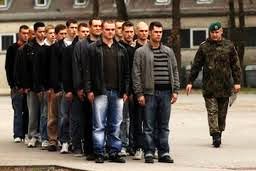
The Conscript’s Dilemma

No forced hierarchy could ever form if those conscripted into it at the bottom killed those doing the conscripting

The thought experiment known as the Conscript’s Dilemma is at the very core of anarcho-homicidalism. It poses a very basic and very primal question that invites the listener to question their inherent attitudes to hierarchy, violence and submission. This essay discusses it from an anarcho-homicidalist perspective.

Imagine that you are a young man entering the prime of his life. Your village lies in the territory of a despotic king who regularly raises conscript troops to go and fight for treasure in overseas adventures. Those sort of adventures are foreign to you. You have you own life to live in the village – obligations to discharge, maidens to court etc. Life is orderly and good.

One day a conscription officer rides into your village. He explains that it’s war time again, and that he has come to round up for the army all fighting age men – which means you. The penalty for refusing to heed the king’s call is death.

This scenario has played out millions of times throughout the history of the Earth. It’s well-known what happens in the vast majority of cases: the villagers, cowed by fear of the distant king, willingly give up their sons to the war machine for fear of incurring the king’s wrath.

After all, if incurring the king’s wrath means certain death, and going to war only means the possibility of death, and there is no third option, going to war is the obvious correct choice.

Or so it might seem.

An anarcho-homicidalist thinks otherwise. Central to the idea of anarcho-homicidalism is that dominance hierarchies could not form without the consent of the dominated, and that anyone trying to enslave you can rightfully be killed if necessary to protect one’s own liberty. This means that the conscript at the centre of this dilemma has a third option: kill the conscription officer and trust that his fellows are also anarcho-homicidalists.

If the others are also anarcho-homicidalists, they will back him up. They will understand that killing the conscription officer was necessary to protect the village and its residents from the kingdom’s hierarchy. They will understand that the king’s actions are tantamount to an attempt to enslave, because they are implicitly claiming that the bodies of the villagers are the property of the king.

If they are not anarcho-homicidalists, that is to say they are normal men, that is to say they are cowards, they will be terrified of getting into trouble from killing one of the king’s men. They will turn the anarcho-homicidalist in, probably for the inevitable reward, or perhaps even kill him themselves out of a belief that he is a murderer and that the conscription attempt was legitimate.

The anarcho-homicidalist knows that if he killed the conscription officer, the punishment is unlikely to be much more severe than the worst potential cost of obeying the demand for conscription, which is to go to war and get slaughtered.

However the potential reward, should he find enough support in his actions that he is not simply taken down by the king’s local sheriffs, is total freedom.

Ultimately, this is what the question of anarcho-homicidalism often boils down to. If you’re not willing to kill to maintain your freedom, then you can’t maintain it in the face of someone willing to kill to take it away.

The Conscript’s Dilemma could be described in much the same way as the Prisoner’s Dilemma, with which it shares much of the same meathook logic. Essentially it’s a question of game theory, and it’s a curious one because the people involved, despite being best served by co-operation, are challenged by powerful incentives that incline them towards not co-operating.

More precisely, the dilemma is that if everyone was an anarcho-homicidalist, and everyone had confidence in everyone else’s faith in anarcho-homicidalism, they would all choose to kill any conscription officer who tried to force them into the army and thereby make slavery impossible, but if sufficiently few of them are anarcho-homicidalists then they will not resist enslavement efforts out of fear that the slavers will punish them, and so slavery becomes possible.

It is a useful rebuttal to those who reject anarcho-homicidalism right off the bat on account of that it explicitly calls for killing people. Very often, the alternative to having a will to kill in self-defence is to become a slave.