
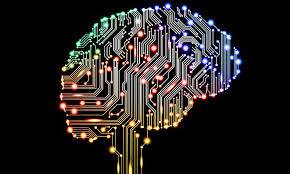
Technology Has Changed The Nature of Human Intelligence

Kraftwerk sang about the fusion of man and machine in the 1980s, but even they couldn’t anticipate how the Internet would change our brains

People used to have a reasonably clear idea of what intelligence is. As measured by school examinations, intelligence is primarily a matter of remembering and recalling disparate pieces of information and, for bonus points, knitting as many of these pieces as information as possible together into a pattern that can be communicated. This was the approach taken by the Chinese Mandarin schools, and it made perfect sense – until now.

It used to be that having a good memory was the most important thing. This is natural if you lived in a time of informational scarcity, as we did for most of our history. Nature didn’t offer a lot of second chances to remember things; if you didn’t remember that crocodiles were often seen in this river, or what your grandmother said about not sticking your hand in empty logs where snakes could be, you probably weren’t long for this world.

Most of the time none of us had any idea what the fuck was going on. Only during the last 5% of the human experience has anyone managed to get anything written down, and even then mass literacy has only been a thing for a hundred years or so, and even then only in wealthy industrialised countries. The concept of being overwhelmed by knowledge was impossible outside of the most rigorous monastic setting.

The Internet has turned this entire equation on its head. It is like a gigantic non-corporeal memory comprising the sum total of human knowledge, never further than a few clicks away. No-one really needs to memorise everything anymore, when they could spend that same precious study time learning to understand the fundamentals of their discipline better.

During most of the time that people have been students, it used to be that you could open your skull and allow it to be filled. Anyone taking the time to speak to you probably had your best interests in mind, and so an atmosphere of high trust existed, and students could be more receptive.

Now, the most important thing is being able to discern truth from bullshit. On the Internet, people are lining up to shovel shit into your head. Not only are there the advertisers who have been a plague on mass media since the 1950s, but there are government propagandists – both foreign and “your own” government, religionists with a new audience, corporate intelligence agents, social justice warriors and anyone else with a drum to beat.

So you have to be more discriminating. After all, there’s no point in being open minded when you’re continually exposed to things like Flat Earth, which really only makes a person more stupid the more they think about it.

The more lies and propaganda there are around, the more intelligence becomes about being able to quickly and cleanly distinguish lies from truth, and to avoid logical errors like the balance fallacy, in which a person gives credence to a false position merely because a lot of people are bleating about it.

Intelligence is now about figuring out when you’re being lied to. Can you tell truth from bullshit when it comes to vaccine claims, for example? How do you know? How do you really know?

Now more than ever, what distinguishes the smart from the slow is how to accurately grade the reliability of the information that comes into their awareness and not simply accept it because the television says so and not simply dismiss it because the Government says so. Now it’s all about the metainformation – the information about the information – which gives us a second dimension by which to measure knowledge.

This will lead to an evolutionary process in which people who adapt to the new paradigm of information being abundant and unreliable, instead of rare and reliable, will outcompete those in the old paradigm of mindlessly memorising things.

*

Vince McLeod is the author of the cyberpunk novel The Verity Key, a story based on his psychological research into whether it’s possible for devices to control people’s thoughts and actions by satellite.


Blade Runner 2049 Shows That Cyberpunk Will Live Forever

A Blade Runner for a new generation poses a set of moral dilemmas for a new generation – as cyberpunk always will

Film pundits are divided over whether or not Blade Runner 2049 can be counted as a successful film. On the one hand, it lost $80,000,000 at the box office; on the other, it has an 8.4/10 rating on the IMDB. This essay argues that not only is Blade Runner 2049 a great film, but it is evidence that the cyberpunk genre will live forever.

Cyberpunk, like Satanism and Test match cricket, is never going to find mass appeal among a Western population that hates thinking. All of these genres are acquired tastes that only a particular sort of person finds interesting – and then, they usually find it fascinating. So it’s entirely appropriate that Blade Runner 2049 did poorly at the box office but extremely well among cyberpunk fans who have a sophisticated appreciation for the genre.

Cyberpunk will always have a place in popular culture, as long as advancing technology continues to pose us moral dilemmas that bring with them the possibility of horror. New technologies will keep putting people in novel and unique situations without any previous example of how to conduct oneself, and they will continue to provide new methods to control, exploit, dominate and destroy.

Even though most new technological advances will be for peaceful and wholesome purposes, we can predict, to paraphrase William Gibson, that the street will continue to find its own uses for things, and therefore there will always be expression for people using technology to get any edge on each other.

Which means that advancing technology will continue to produce moral dilemmas that make for fascinating fiction.

The moral dilemma at the heart of Blade Runner was whether or not artificial humans could ever be considered real people, and so whether or not there was ever a moral obligation to treat them as equals, in the way that most people feel a moral obligation to treat other people as equals. Roy Batty was outraged that humans might have engineered him to have such an artificially short life span, and viewers were likely to concede that he had a point.

For whatever reason, the collective consciousness appears to have concluded that replicants are not, and can never be, conscious. Fair enough, but the moral dilemma at the heart of Blade Runner 2049 is whether or not the offspring of replicants that can breed are conscious. The characters in the film seem to glibly assume that any creature that is born must have a soul, but the question is never discussed at length by them, leaving such ruminations for the viewer.

Blade Runner 2049 poses this question in a believable and terrifying manner, and forces the reader to consider Philip K Dick’s fundamental question of science fiction: not “What if…”, but “My God, what if…” My God, what if artificial creatures that managed to replicate were actually conscious in the same way that we are conscious? What if acting to reduce the suffering of all sentient beings in the universe meant that we had to consider the offspring of replicants?

Cyberpunk is always going to raise questions like this, because it will always be true that somewhere there is a megacorporation with pockets deep enough to finance bleeding-edge technological research and application away from the watchful eyes of the government or the public, for whatever dark and twisted motives the world can surmise.

Because it did such an excellent job of posing such deep questions in a way that chills the spine of the viewer, it can be argued that Blade Runner 2049 is an excellent piece of cinema for the sort of viewer who appreciates a subtler and more cerebral tale than the usual Hollywood fare, even if it did not find mass market appeal.

*

Vince McLeod is the author of the cyberpunk novel The Verity Key, a story of ANZAC mateship in a dystopic future world where it’s possible for devices to control people’s thoughts and actions by satellite.

Misdirected Estrogen

Estrogen impels women to find vulnerable creatures to look after, and if they do not have children it will be cats… or refugees

Everyone’s familiar with the joke about the woman who decides not to have kids and inevitably ends up with piles of cats. Like many popular jokes, there’s an element of taboo truth to it: women have a certain level of estrogen to discharge and if they don’t have children they will often substitute a cat to be the subject of their nurturing instincts. This process plays a role in global politics as well.

This is all very natural – evolution, of course, selects for the kind of woman who breeds, and the kind of woman who breeds will usually have a massive dump of estrogen hit them near the end of their reproductive cycle. This estrogen will make them compulsively seek after a “warm fuzzy” feeling that results from being nice – a behaviour that has obvious evolutionary benefits for a breeding female who has children in need of nurturing.

All well and good if she does have children, because the woman will then try and be nice to her child in order to meet its developing needs, which will help to ensure that it grows up mentally and physically healthy. Even if she doesn’t have children she can look after other siblings or cousins, so this hormonal development still makes sense.

In our world, where the family structure has been shattered, women in their late 30s and 40s often have no children upon which to lavish all their nurturing instincts. At the same time, there are many cats in need of good homes, so the two things are a natural fit. All in all, this works out pretty well. Women get to enjoy the company of cats while the cats get to have homes.

Where it doesn’t work out well is when that misplaced estrogen gets directed onto refugees.

It first became fashionable to advocate for mass resettlement of refugees in the same places where it first became fashionable to delay motherhood. This is not a coincidence. Women who have delayed motherhood will look for any reason to try and generate for themselves the estrogen-based warm fuzzy that their breeding peers will be full of on a daily basis.

Unfortunately for us, the modern career woman is too busy for cats and so the entirely natural desire of a female to take care of a vulnerable being has been displaced from the children she hasn’t had to the surplus offspring that someone else has had. This usually means refugees, because the poor and mentally ill people already in the country are not fashionable at the moment, and in any case they’re usually stinky and old.

So instead of raising a well-adjusted child they often choose to invite a permanent psychiatric casualty into their communities. This psychiatric casualty, even if they do not commit any crimes, will almost certainly pay nothing back into the pool for the general upkeep of society, and so represents a massive loss compared to the opportunity cost of a fully-functioning adult raised by healthy locals.

Doubly unfortunately, there’s no way of talking rationally to any person with this feminine impulse to dote on a vulnerable being (not only childless women but also male feminists and beta males trying to virtue signal to get laid) because people who get hooked on the warm fuzzies of looking after a helpless creature are every bit the drug addict as any crackhead. They will ceaselessly strive for bigger and bigger hits, sacrificing more and more to achieve them.

This is not a bad thing when it’s making sure that the next generation of our people are healthy. When it gets misdirected to undermining our own culture by inviting permanently crippled people in to absorb economic opportunities that were intended for our own people, then it gets bad.

Unfortunately, our controllers know full well that things like this are going to be happening and they have anticipated it all. That’s why they have a product ready to sell us before we even know we have the desire to buy it.

What Armistice Day Could Mean to the Psychonaut

The cessation of conflict that was tearing one apart – whether physically in the form of war or spiritually – is celebrated on Armistice Day

Armistice Day – 11 November – is a celebration that marks the armistice that ended hostilities at the conclusion of World War One. On this day in 1918, soldiers on all sides put down their guns, bringing an end to what had been, until then, by far the most mindless display of human savagery, ruthlessness and murderlust in history. The retrospective sense that it may have been better to not have fought in the first place echoes in the life of the psychonaut.

In the life of an ordinary person one struggles, and fights, and desires, and wins and loses, and always it’s a tremendous battle to satiate the demands of one ego, which yearns to be exalted. And then, if one ever sees the brick wall at the back of the theatre, one laughs because the battling is all so silly when there’s no way for you to ever really lose.

This is a microcosm of the struggle of nations to exalt themselves on the world stage – a struggle which is so bloody that if it ever stops being violent even for a moment we commemorate it almost a century later, in the hope that we never forget the price of peace.

Like the Great War soldier, the psychonaut has to learn how to put down his guns, but in a metaphorical sense. He has to learn how to be open to the world and to reality, to not be afraid of the inevitable, the indescribable, the ineffable or the incomprehensible. His is the path of the shaman, one who sees beyond, and who returns with knowledge that is not accessible from ordinary perspectives.

Putting down one’s guns might mean, spiritually speaking, that one puts down one’s more aggressive egotistic defences and accepts that one will die one day, and therefore that all victories on this earthly plane are fleeting, transitory, and not worth losing one’s dignity over. It’s the kind of realisation that one might just as well get on the battlefield as from a psychedelic.

Believing this means to value peace in one’s life.

Part of this might be to accept the inevitability of the future death of one’s physical body, and thereby to prepare oneself for the profound change to the contents of consciousness that will follow, instead of repressing it, panicking at every mention of it, or denying the magnitude of the chaos that will befall one over the horizon of death.

The vast majority of people, being materialists, can only look at the prospect of the future death of their physical body with whimpering horror, because materialists almost always bear the delusion that the brain generates consciousness and therefore that the death of the brain necessarily means the extinction of that consciousness.

A person who has seen beyond has had cause to put down his guns, because he knows that living a life that expresses an acceptance of the inevitable will cause the environment around him to be more harmonious than it otherwise would have been.

This doesn’t means that the psychonaut must martyr himself on the spot out of guilt. Putting down one’s guns does not imply that one become passive, or submissive, or self-debasing.

It simply means that one stop behaving like a traumatised dog, ever on the ready to lash out in self-defence, and ever vigilant to all possible new threats from any direction. It means to relax, to let go and to forgive. This teaching is in many ways at the core of all religious and spiritual sentiment.

The lesson of Armistice Day is that conflict has a time and place and when those qualities no longer obtain then it’s time for peace. A genuine interest in peace means tuning oneself into a frequency from which conflict does not arise, a place that a Pyrrhonist would all ataraxia, a Luciferian would call apotheosis and a Buddhist would call nirvana.