
The Three Orientations of Bravery

Bravery is generally thought of as an ability to maintain calmness and composure in the face of danger, especially in the context of going forward into that danger for the sake of achieving some moral goal. It’s almost univerally thought of as a highly desirable personal quality and usually thought of as a masculine one. Originally bravery referred to physical courage, but, as this essay will show, there are at least three major perspectives that one can take on the concept.

These three perspectives translate into the perspectives of iron, silver and gold if one takes the approach of elementalism or esoteric alchemy. These can be thought of as forms of bravery that evolved from a successful resolution of the challenges that led to the previous form.

The form of bravery that corresponds to the iron is the simplest and most universally understood of the four orientations. Here the iron responds to upwards – a form of bravery that is oriented up the dominance hierarchy, towards one’s parents, one’s boss or the local king. Here, being brave is a matter of standing up to those who would try and hurt you.

This orientation of bravery is usually understood in a martial sense, and indeed we can see that Mars, which represents iron, gives us the etymological origin to words like ‘martial’. In the context of esoteric alchemy, ‘martial’ means ‘like the iron’ and therefore reflects a sense of being sharp, strong and unyielding.

As a warrior proves his bravery in the arena of iron (by whatever means) and succeeds in keeping dependents safe, he naturally comes to take on a shine, which represents his entry into the arena of silver. He learns that keeping the peace is as much a question of diplomacy as it is a question of beating the shit out of people, and he finds that he no longer needs to orientate himself up so much.

This form of bravery is the form of bravery that goes outwards. In the same way that a given volume of silver can cover more area, when hammered flat, than the same volume of iron, the bravery of the man of silver is that which orients itself over a wide area.

Once a great warrior comes to take responsibility for his tribe and becomes a chief, the next step up the hierarchy of silver is to take responsibility for a wider and wider geographical area. This is natural as long as he continues to shine, because this will cause people from far and wide to seek his judgment and mediation.

The bravery involved here is not so much slaying dragons and more a will to confront the real nature of the physical world and to strive towards its mastery. This means the real nature of the world in terms of its physics, chemistry, mathematics, biology and related disciplines, as well as statecraft.

When the man of silver moves beyond his prime years for taking responsibility for his people, he enters the arena of gold. Gold represents the form of bravery that goes inwards. This is like gold because it is the rarest and most precious form of bravery.

A person who orients their bravery inwards learns to make peace with God, which is the hardest thing of all to achieve because this orientation has the fewest biological instincts giving it power. Biological instincts are not generally concerned with bravery in general, because that is a moral orientation – they are concerned with survival and dominance.

One reason why this form of bravery is so rare is that not everyone understands that it takes bravery to truly look within – but it does. It takes a lot of bravery to look into your own soul and to ask yourself if you are truly good or evil, or if such things really exist. It takes incredible bravery to really truly ask yourself if you can be comfortable saying goodbye to all of your attachments with this world upon the moment of your physical death.

The three orientations of bravery, therefore, relate to the challenges that naturally faced people in the historical past as they overcame the dangers of their environment.

Why Books Will Surge Back Into Fashion

The next great invention is like a comprehensive collection of webpages on a specific topic, printed on paper and with no advertisements or intrusive pop-ups, bound into what’s called a “book”

Way, way back in the almost prehistoric age of 1993, the Internet was barely in its infancy. Compared to its form today, the Internet of 1993 was practically at the zygote stage. As the elderly readers of this column may recall, gathering information mostly involved a building called a library, which stored information solely in hard-copy format (i.e. books).

This system had worked out pretty well for a few thousand years, as it became common for kings and rulers to build royal libraries for the sake of attracting scholars from near and far, which made it possible to have an educated middle class, and, with that, all the trappings of what we now call civilisation.

In the mid-90s, at about the same time as the introduction of Windows 95, things started to change. Although there were still very few people who had decent websites or information portals up, there only needed to be a few thousand such resources for the Internet to be bigger than most people’s local libraries.

A tipping point was then reached. Once the Internet started to contain more information than the average library, it started making more sense for researchers to make the Internet their first port of call. Most of the early Internet pages were built by nerds and hobbyists who were obsessed with their area of expertise, meaning that you could go on the Internet and effectively find entire books worth of information from digital libraries all around the world.

This made researching many times more efficient than it used to be. Early web browsers like Netscape, Northern Lights and Metacrawler allowed people to escape the nightmare of index cards and misshelved books. This made it possible, with technological enhancement, to learn many times faster than one otherwise could have done.

Then, something terrible happened. Someone realised that this unprecedented access to information was so valuable that you could start sticking advertisements on it, and people would still consume the medium. At this point, the televisionisation of the Internet began.

It was subtle at first. Just a “sponsored post” here and there, or a notice that the big banner ad underneath the header was now necessary owing to increasing bandwidth costs. But as the shekels rolled in, more and more people became attracted by promises of easy money, and started making websites specifically to put ads on them. When Google introduced AdSense in 2003, the floodgates were fully opened, and have remained so ever since.

In 2018, advertising on FaceBook and Google search is as intrusive as television, radio or newspaper media ever was. What was once a portal away from crass commercialism and the mindless pursuit of more money, the Internet has now mostly become a collection of billboards-for-rent. Websites such as VJM Publishing, that do not advertise apart from a list of links to our published books in the sidebar, are extremely rare.

Worst of all, the surge of advertiser money has seen the advent of mass censorship, as leery marketing executives put pressure on platform providers to make controversial speech less accessible so as to ensure their product is not associated with anything unfashionable. This has sent people who want access to quality information elsewhere.

The final result of this is that books are going to take over again. The Internet won’t go away, because it continues to fill an extremely useful niche in study and research, but people will start using it less for actual information (because of the ever-more intrusive ads), and more as an index through which quality information in the form of books can be found (which is ironically closer to its original purpose than it is today).

Because the Internet is so vast, it allows for tremendously specific books to be written and to be easily made available to readers, despite the ads. This new breed of books will be responsible for the resurgence in book readers over coming decades.

*

If you enjoyed reading this essay, you can get a compilation of the Best VJMP Essays and Articles of 2017 from Amazon for Kindle or Amazon for CreateSpace (for international readers), or TradeMe (for Kiwis).

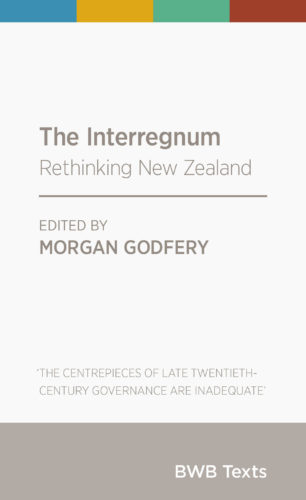
VJMP Reads: The Interregnum: Rethinking New Zealand X

This reading carries on from here.

The tenth, and last, essay in The Interregnum is ‘Politics of Love’, by Max Harris. Like the other essays in this collection, it speaks from an unashamed youth perspective, such as when Harris complains of the “stale language” of the current political discourse.

This essay is about the politics of love, and it opens by defining what love is to Harris: “a feeling of deep warmth that is directed outwards towards an object, such as another person.” There is nothing objectionable about his definition of love; indeed it seems fairly comprehensive, especially when he writes that “the idea of love is closely tied to relationships and the connections between people.”

Predictably, given the Marxist leanings of the previous essays in this book, this essay quickly moves on to a declaration that the politics of love would necessitate “a willingness to accept a greater number of refugees.”

But one wonders why it is that emphasising the aspect of love leads naturally to the conclusions that Harris takes it to.

Why not, for example, stop all immigration to New Zealand from the Third World on account of love for the people already in New Zealand, whose living standards drop when Third Worlders move into their locales? Isn’t it entirely possible that my love for the people of New Zealand impels me to want to see them safe from robbery, rape and murder – the crimes that mass Third World immigration has brought to Europe and America?

Doesn’t our love for young New Zealand girls and women drive us to keep them safe from the rampant sexual abuse and harassment that is now part and parcel of the female experience in Europe?

Doesn’t our love for the homeless and mentally ill already in New Zealand drive us to take care of them as a priority, before we spend money importing irreparably damaged people from the other side of the world to jump in front of them in the queue?

Doesn’t our love for the hardworking taxpayer who has busted his back his whole life drive us to ensure that he can retire at a fitting age, instead of having to work into senescence to pay for gibs?

The essay makes a plea for more solidarity, but how is that possible when diversity is also increasing? It points out that New Zealanders already feel disconnected – so how will importing tens of thousands of “refugees” help? It will only add to the ethnic chaos, making us feel even more disconnected.

But Harris, and people like him, would happily call me hateful for asking those questions.

The Philosophy of Materialism is The Memetic Cancer of Our Age

The brain generates consciousness and therefore the death of the physical body means the extinction of all awareness – so buy buy buy!

Materialism – what is it good for? To give it its due, it’s a very useful paradigm to adopt if one wants to conduct an experiment in any of the physical sciences. The monkey who first realised that fire could be started from the friction of a hard wood on a soft one derived an enormous advantage over the monkeys who were still doing dances to try to please the lightning gods.

More recently, materialist science such as physics and chemistry led to Anglo-American dominance of the sea trade routes, as the adoption of first coal, then oil, then uranium allowed these powers to keep a naval force in operation that was orders of magnitude more powerful than what was possible under sail. Mastery of these sciences also allowed these same powers a decisive military advantage in terms of weaponry.

All well and good – but what is materialism bad for? Many, many, many things. Unfortunately, materialism has strengthened beyond being a mere scientific approach. It’s not even a worldview anymore. In our blind 21st century, materialism must be accorded the status of a legitimate religion. This has had profound effects on the political, scientific and intellectual discourse of all nations.

Like any dominant religion, the presuppositions of materialism can no longer be questioned in polite society. It’s possible to talk about “the” biological basis of consciousness as if it were already an established fact that consciousness has a biological basis. Asking how it is that it’s known that consciousness has a biological basis elicits, in materialist circles, a similar response to going into a church and demanding the priest prove his contention that the Bible is the Word of God.

It’s just not the done thing.

And so it’s possible for one of the world’s most prominent intellectuals, Sam Harris, to discuss consciousness with a supposed expert on the subject for over an hour without either of them questioning the dogma of the “biological basis of consciousness”. That the brain generates consciousness and not the other way around is assumed from the beginning, and all subsequent data has to be shoehorned into this framework or discarded.

Ironically, the podcast mentions that consciousness had hitherto been the purview of philosophers, in a passage exclaiming how good it was that other disciplines are now considering it. The reason why this had been the case is now obvious – because physicists, chemists and neurobiologists are incapable of the logical reasoning necessary to truly consider the question. This logical failure leads to errors like assuming right off the bat that the brain generates consciousness, the type of error that philosophers generally don’t make.

Listening to a supposed expert in neuroscience ramble on about the biological substrates of consciousness is every bit as depressing as listening to some old priest ramble on about whether or not we’re allowed to drink wine on Sundays. Both charades are dependent on one gimmick: take for granted the biological basis of consciousness and we can explain everything (says the neuroscientist), take for granted the eternal truth of the Bible and we can explain everything (says the theologian).

The worst part of it is that – just like Abrahamism, Nazism, Communism and Marxism – materialism has also rotted the minds of the people who have come to believe in it. Like a cancer, it has given rise to a number of bad things, all of them ultimately caused by the belief of materialist individuals that the death of their brain inevitably means the extinguishing of their consciousness.

Materialists are generally indifferent to the condition of the world after they die. Let’s just rape it now is their motto. After all, if their consciousness is extinguished upon the death of the brain, there is no logical reason to act in a manner custodial to the life that comes after you. There won’t be any way it affects you, so why bother?

Materialists are also easily manipulated by death anxiety. People who know that the consciousness survives the death of the physical body can laugh in the face of death, because they know that death will not occasion a traumatically significant change from the state of existence that pertained before death.

This latter point is why materialist cultures like the British fight wars all over the world while non-materialist ones such as the Indians do not. A Brit can easily be terrified into doing what you tell him because of the fear of invasion or economic disaster or God’s judgment or some other catastrophe; the Indian will just laugh.

For Western culture to survive, we have to cast off the spiritual sickness that we inherited even as we assumed scientific and military dominance. We have to move past materialism and the ludicrous contortions of reasoning that it forces people to undergo.

Psychedelic drugs and meditation are the cures for the memetic cancer that has been growing in the West for a few centuries.

*

If you enjoyed reading this essay, you can get a compilation of the Best VJMP Essays and Articles of 2017 from Amazon for Kindle or Amazon for CreateSpace (for international readers), or TradeMe (for Kiwis).