
How To Fix All of Cricket’s Problems At Once: Introducing the T0 (T-Zero) Format

Taking thirty overs out of the middle of ODIs has been such a success, we need to consider removing a further twenty

T20s were invented to fill a specific niche in the cricket market. It was believed by some great, visionary minds that cricket fans were turning away from ODIs because of the “boring” middle overs between ten and 40. Apparently these 30 overs had too many balls that resulted in neither a wicket nor a boundary, causing viewers to switch off from a lack of action. This essay proposes that we reduce limited overs cricket by a further 20 overs.

There have been experiments with reducing cricket matches to less than 20 overs, such as the recent T10 tournament in Sharjah. Some brave souls have talked about T5 cricket, but what is being proposed here is the advent of zero-over cricket, hereby dubbed the T0 (pronounced “tee-zero”) format. It’s technically a form of limited-overs cricket in the sense that overs are, indeed, acutely limited.

Many people say that Tests are boring because the result is often a foregone conclusion. Over five days, it’s as likely as anything ever is in sport that the most skilled side wins. This contrasts sharply with soccer, and with T20 cricket, because these sports have a much greater luck component. This luck component means that weaker teams can upset stronger ones more often, making for a much more engaging spectacle.

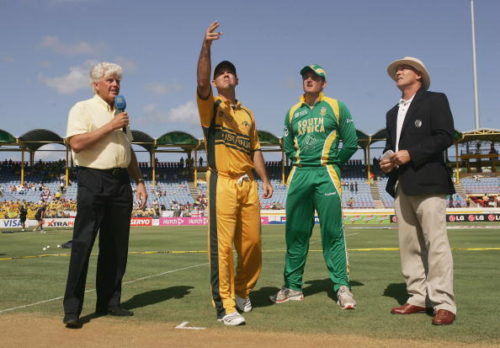
Why not maximise the thrill of potential upsets by deciding the match at the coin toss?

Purists will likely dismiss the idea at this stage, pointing out that reducing the contest to zero overs also reduces the batting, bowling and fielding components of the game. While this is a fair criticism, it needs to be balanced against the fact that the boring aspects of the game would also be reduced. T0 cricket completely does away with the notion that the players are just going through the motions; every moment of every game would be crucial to the outcome.

In all, there are at least three major reasons to support the expansion of T0 cricket. Each of these reasons solves a major problem with the current state of the longer formats of world cricket.

One of the foremost is that it would enable cricket to be expanded into markets where people have not been able to play because of the expense. Cricket is a fairly expensive sport to play, especially when compared to rugby or soccer, and this puts an upper limit on its market appeal to the poorer demographics of the world. Many interested people just don’t have the spare cash for several bats, balls, a set of pads, box, helmet, thighguard etc.

In T0 cricket teams don’t need anywhere near as much equipment as they need in the longer formats – for some players a uniform would suffice. Moreover, maintenance of that equipment is also reduced to a minimum on account of being used less often than in the longer formats of the game. Limiting the equipment factor will also have the effect of reducing gear envy among teammates.

The effect on wear and tear on the players’ bodies is another problem solved by T0 cricket. England head coach Trevor Bayliss was in the news recently for saying that T20 internationals should be dropped from the schedule to help with player burnout. Bayliss contends that the cricket schedule is so jam-packed nowadays there is no time for players to rest.

T0 cricket takes away the physical exhaustion factor. By minimising the incidence rate of high-risk physical exertions, T0 cricket also minimises the chances of injury or burnout. Also, with awareness growing about the long-term dangers of concussions, mothers of young keen-on-cricket children will be relieved to hear that T0 cricket offers very little risk of players getting hit in the head by a hard, rapidly moving ball. The biggest risk is getting a coin in the eye.

Modern life has a peculiar obsession with equalising conduct between the sexes, and T0 cricket can proudly claim to have solved the gender problem. At the moment, men and women can’t really play cricket together because of the fact that men are much taller and stronger, which provides immense advantages when it comes to bowling a ball fast or swinging a bat hard. The differences are so vast that leagues currently have to be separated by gender.

Many would argue that these gender differences, like the personal differences in height and muscle mass, make the game of cricket inherently unfair. Instead of everyone having a reasonable expectation of being able to pull off a win, the longer forms of cricket reduce batting to a mere contest of strength, timing and hand-eye co-ordination, and bowling to a simple process of repeating a single action with maximum shoulder leverage.

T0 cricket would provide a truly level playing field, as all players would be limited to their own ability to pick which side the coin was going to land on – a tricky skill to master even for the most dedicated or gifted athlete.

In summary, there are a number of reasons to think that this revolutionary proposal could rejuvenate the public’s appreciation for the sport. T0 cricket offers the perfect solution for busy people in our modern world who don’t have copious amounts of time to set aside to watch a match, and is surely the future of our beloved game.

*

If you enjoyed reading this essay, you can get a compilation of the Best VJMP Essays and Articles of 2017 from Amazon for Kindle or Amazon for CreateSpace (for international readers), or TradeMe (for Kiwis).

Why Spirituality is Represented Elementally by Gold

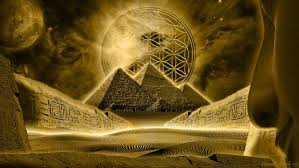
In terms of elementalism, it can be said that clay represents health, iron represents courage, silver represents intelligence and gold represents spirituality. But why should spirituality be equated with gold in particular? This essay examines the question.

Gold is the cornerstone of the economy, because it’s ultimately what backs debt (even if that’s no longer as apparent as it was when we were on the gold standard). Everyone knows, intuitively or otherwise, that other people will always accept gold as payment for goods and services, and therefore that the substance always has value. This means that material things can be valued in terms of gold.

In alchemism, gold represents spirituality, for the reason that spiritual treasures are the most valuable of all. The universal appeal of gold is similar to the universal appeal of a genuine connection with God. Much as the value of gold is obvious to anyone who can sense it in the material plane, so is the possession of metaphysical gold obvious to those tuned into it.

Gold is the rarest in physical terms, and its the hardest to create in alchemical terms. Like genuine spiritual wisdom, there simply isn’t very much of it. Although clay is everywhere and iron can easily be found, silver and gold require more effort, and gold twenty times more so than silver.

The intellectual traditions that give value to silver might be hard-won, but it’s possible to develop them in a formulaic manner through the education system. There is no such thing as formulaic development of spirituality. Every consciousness takes its own path back to God.

Without spirituality, people are terrified of their own deaths, because they tend to drift into materialism, and therefore the belief that the brain generates consciousness, and therefore the belief that the death of the physical body means the extermination of this consciousness.

This reasoning causes them to think more short-term. After all, if long-term thinking means having to face up to fact that one will die, it’s best to avoid it entirely. Best just to live for immediate gratification, and the less guilt the better.

This has repercussions, many of which are denied by the men of silver and iron. The men of silver delude themselves into thinking that the spiritual side of life is childish nonsense, in contrast to the hard, adult sobriety of their scientific materialism. The men of iron, for their part, consider gold to be soft and therefore a weak element, not particularly more valuable than clay on account of its lack of immediate application to warfare.

Both are grievously wrong, and wrong in a way that causes immense suffering. The men of silver find that, no matter how many books they read, they cannot solve existential questions without an understanding of the true nature of God. Absent this, the pin is pulled from history and it no longer has any meaning. The men of iron don’t even know what they’re missing out on.

Another way in which gold represents spirituality is that it cannot degrade. Clay can rot, iron can rust and silver can tarnish – but there is no such equivalent for gold. One can leave a gold coin out in the elements for ten years and it will be as shiny as the day one left it there. Like spirituality, gold is not temporal in this sense.

Metaphysical gold works in a similar fashion. The health and strength of every person fades early in their life, and their mental powers fade late, but all of these temporal powers must fade. Spirituality relates to that which endures beyond the death of the physical body, and value earned early in life tends to endure.

A final way is that gold is extremely malleable: one gram of it can be hammered out into a sheet one square metre in area.

Spirituality, too, is extremely malleable. It is useful everywhere. Whereas big muscles are seldom useful and big brains are only useful where there is information to be processed, an appreciation of the fact that this is it will pay off in all domains of life.

*

If you enjoyed reading this essay, you can get a compilation of the Best VJMP Essays and Articles of 2017 from Amazon for Kindle or Amazon for CreateSpace (for international readers), or TradeMe (for Kiwis).
The Century of Psychology is Being Delayed By Politics

This might be the “Century of Psychology” – if politicians allow it to be

It could be argued that the 19th century was the century of physics, and the 20th century was the century of chemistry. Men such as Maxwell, Watt, Faraday, Tesla, Edison, Rutherford, Hoffmann, Einstein and Shulgin transformed our everyday lives. But now that we can blow up the entire planet at the press of a button, physics and chemistry seem to have hit their limits. This essay argues that psychology will be the science that transforms the 21st century, but there are numerous political obstacles in the path.

As once was true for physics and chemistry, the current popular level of understanding of psychological science is primitive. In the same way that we laugh about previous generations believing that the Moon was made of cheese, so too will future generations laugh at us for believing ridiculous things like smoking cannabis causes schizophrenia. Descriptions of the way we treat desperately mentally ill people today, such as subjecting them to involuntary electroshock treatment, will evoke horror in the future.

Nowadays, thanks to mass education, people can get their heads around aeroplanes, photography and nuclear energy and no longer consider them sorcery. There are a number of obstacles, however, that must still be overcome before the science of psychology can have its full impact upon the world. The main one at the moment is that people tell lies because of politics, and these lies obscure the truth about humanity’s true nature.

For example, the left tells lies intended to create a perception of, and belief in, the natural equality of all people. Because their political dogma is based around the need for horizontalisation, they are loathe to concede that any two people or groups of people are different in any way that might imply that one was better than another.

Although there are no two things in Nature that are precisely equal, the fervour with which it is asserted that all human groups are precisely equal in intellectual capacity equals that of any religion. At its most ridiculous, this obsession with equality will concede that the human form has been shaped by evolution and that the differences in human phenotypes are a function of evolution, but that evolution stops at the neck.

Many people have discovered that genetic differences between groups, especially when it comes to intelligence or temperament, cannot simply be discussed openly without some leftist shrieking all manner of accusations at the participants. This has a retarding effect on the advancement of science because people become reluctant to discuss psychology honestly for fear of having “Racist!” screamed in their face.

The right, for its part, blames the poor and blacks for their state of poverty. If only they would stop doing drugs and read books, the right contends, prosperity would soon follow. They have no time for the arguments that the poor are doing drugs to medicate trauma-based mental illnesses that no other medicine can treat, or that they can’t concentrate to read books on account of being full of adrenaline all the time from the verbal and physical violence in their environment.

Not only does the right tend to blame people for the damage that has been done to them from the outside, but they give credit to people for success that is better attributable to the environment in which that person was raised and the support networks they had. This is bad because it makes it impossible to discuss the nature of society accurately and with honesty, and therefore impossible to design social policy that reduces human suffering.

Authoritarians tell a story about human nature that exaggerates our similarity with chimpanzees. This narrative emphasises the violent struggle of daily chimpanzee life and how qualities such as viciousness, paranoia, brutality and aggression serve to keep one’s enemies at bay. It represents an extreme form of verticalisation in which no-one can turn their back on anyone else for a second.

This ideology can be used to justify a wide range of cruelties, because authoritarianism is naturally terrified of chaos, and so authoritarian societies clamp down on free expression and recreational exploration of sex, drugs and music. All of these things, plus others, are regularly banned in authoritarian societies, which emphasise the usefulness of hierarchy for keeping things in their place.

The problem with this attitude is that human beings have a need for recreational activities, because boredom is literally a mental disease, and one that leads to physical diseases. People have to be allowed to enjoy themselves, because human nature needs to find a balance to the masculine working and fighting aspects of life.

Moreover, authoritarian thinking cannot handle drug use because drug use leads to free thought, and novel ways of thinking are considered security threats by control freaks, who clamp down on them. This mentality is responsible for cannabis being illegal. Pharmaceutical advances in the treatment of psychological conditions seldom happen when authoritarians are in charge.

Libertarians, on the other hand, tell a story about human nature that exaggerates our similarity with bonobos. This narrative emphasises lovemaking and peace, and maintains that all people are capable of being good if only given a chance. Although this is based in a perfectly lovely sentiment, it’s no less dangerous.

For one thing, the belief that all people are inherently good makes it harder to defend ourselves from those who are not good. Libertarian naivety about the dark rivers that run through the human heart mean that they make political decisions that expose them to that darkness. Often the mistake is not realised until it cannot be easily rectified (such as the European experience with Muslim and African immigration).

Another point is that libertarian logic denies the inherent human need for (at least a modicum of) order. It might be true that excessive legal and cultural strictures cause suffering, and that liberation from such is exhilarating, but no-one can simply dwell in a state of chaos without eventually feeling impelled to impose some order upon their surroundings.

Psychology has the potential to radically improve the standard of living of all people, especially this century as advances in brain-scanning technology herald great advances in neurochemical understanding. The biggest challenge that psychology faces, however, is that many people are motivated to deny psychological truths for the sake of political advantage. This will delay the impact of advances in psychological science on human society.

*

If you enjoyed reading this essay, you can get a compilation of the Best VJMP Essays and Articles of 2017 from Amazon for Kindle or Amazon for CreateSpace (for international readers), or TradeMe (for Kiwis).

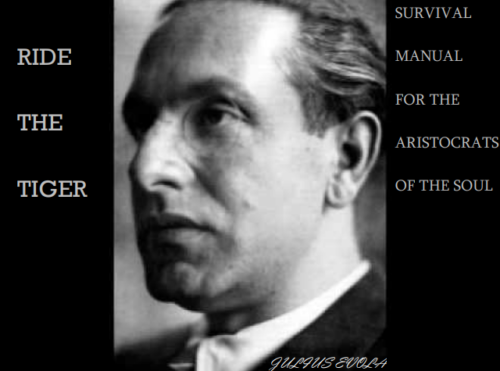
VJMP Reads: Julius Evola’s Ride the Tiger II

This reading continues on from here.

Part II of Ride the Tiger is called ‘In the World Where God is Dead’, and deals with the ever-present problem of the nihilism that arises when one abandons traditional values. This part consists of nine essays.

The first of these (the third essay in the book), ‘European Nihilism – the Dissolution of Morals’, sets the tone for this section. The subject matter will be familiar to any reader of Nietzsche, and indeed Nietzsche is mentioned in the first paragraph. This essay also mentions Doestoevsky, in the context of “If God is dead, everything is permitted.” It promises to be heavy stuff!

“Rational”, or atheistic morality, has no firm basis, Evola contends. Without an appeal to a higher power, any moral philosophy will eventually be chipped away at by critics until it disintegrates. Moral taboos cannot be justified, and therefore we can’t move past “everything is permitted”.

Perhaps more worryingly, it’s possible that, even if God did exist and inform us all, nothing would really change.

The fourth essay is ‘From the Precursors of Nihilism to the “Lost Youth” and the Protest Movement’. Existence has become absurd, Evola contends, because there are no longer any restraints. Here he traces the advancement of nihilism in the years post-Nietzsche. As Nietzsche predicted, the problem of nihilism only intensified as we entered the 20th century.

Movements such as punks and beatniks are drawn under the wider rubric of nihilists. The counter-culture becomes, for Evola, a “destructive, voiceless rage”. It’s isn’t necessarily that things are bad in and of themselves, but that a quiet, peaceful, mediocre life evokes this rage. Natural man feels little difference between the modern cornucopia of manufactured goods and slavery.

Citing Paul van den Bosch when he wrote that “When we were born, the gold was already transmuted into lead,” Evola makes another appeal to the perennial philosophy and its esoteric nature. This is necessary because the left-wing revolution has “betrayed its origins” with “a new conformism” – a statement that echoes in 2018.

The fifth essay is ‘Disguises of European Nihilism – The Socioeconomic Myth and the Protest Movement’. To Evola’s mind, there are two great socioeconomic myths of our time: the myth of Western prosperity, and the Marxist-communist myth of oppressor versus oppressed. Both myths are predicated on the same falsehood, namely that the signs and markers of the dissolution of society represent “progress”.

One severe problem exists with both of these myths: neither has any room for any conception of a higher world – the realm of gold in alchemism – and so both myths, while they solve the problem of nihilism, introduce unacceptable problems of their own. Both ideologies are predicated on a gross, fundamental error: that solving questions of material suffering will also solve questions of existential suffering.

Perhaps the last words here are “there is no correlation between material and spiritual misery.” This lays out the futility of trying to find absolution through materialist avenues. One is left with the impression, in Evola’s words, that “The time is near of the most despicable οf men, who can nο longer despise himself.”

Are we now in the time of the Man of Clay?

*

If you enjoyed reading this essay, you can get a compilation of the Best VJMP Essays and Articles of 2017 from Amazon for Kindle or Amazon for CreateSpace (for international readers), or TradeMe (for Kiwis).