

The Two Faces of Trolling

The distinction between good trolls and bad trolls is subtle

Trolling is more than just an art; trolling is a lifestyle. It attracts a very wide range of people. So wide a range that some of the people who troll are quality, while many others are dogshit. This essay attempts to distill the range of trolling behaviours on the Internet into two major categories: bullying and challenging.

Not everyone can tell the difference, and the more narcissistic a person is, the more likely they are to confuse a challenge for bullying. Moreover, the more a person dislikes the person making that challenge, the more likely they are to confuse a challenge for bullying. Keeping on the right side of this fine balance is where much of the art of trolling takes place.

In short, bullying is attempting to knock down something good while challenging is attempting to knock down something bad. For the person who values the target of the knockdown attempt, the distinction is seldom meaningful. But for the person who regards that target with low or negative value, the distinction is colossal.

Challenging in the form of gentle pisstaking and banter is a regular part of verbal discourse between friends. In essence, friends challenge each other for the sake of knocking down that which is weak in the other, so that their friend might replace it with something strong. The friend might not know they are weak in a certain area, or perhaps they cling stubbornly to the weakness and need to be disabused of it for their own good.

This pisstaking is an essential part of the culture in New Zealand and Australia, and in the other Anglo countries to a lesser extent. It’s how we keep ourselves humble in the absence of a shared spiritual tradition. The idea is that anyone who becomes too prideful is mocked back down into a more socially useful level of humility.

Bullying is different, because it seeks to shame for qualities that cannot be changed. Ripping someone down because they are short, or because their parents are poor, or because they are of a certain race or hair colour are all acts of aggression because the person targeted cannot do anything about those things. There’s no mutual exchange of sentiment.

The intent of pointing out these qualities is to humiliate, not for the betterment of a person who may have become too prideful but for the self-aggrandisement of the bully. Thus, the targets of bullying need not have become too prideful to get attacked. For these reasons, bullying is in most cases vile and gratuitous.

The art of trolling is to skate close to that edge where challenging becomes bullying, for the closer to it one skates the more effective the challenge will be (especially if there are neutral onlookers). Too much bullying and the troll will look crude and aggressive; too little bullying and the troll will appear meek and ineffective.

The best kind of trolling is when you can get an egotistical person to make an arse of themselves. Hopefully they learn something in the process, becoming less of an arse and thereby more pleasant for others to deal with, but that’s not the main concern. The important thing is that the egotist is made to look like a chump, thereby lessening the chances that anyone observing the interaction will go on to behave like them.

Usually this is achieved by goading them into telling obvious lies or making transparently false boasts about their current or future prowess. If the troll can bait an egotistical person into destroying their own reputation through rank hypocrisy, logical incompetence or descending into mindless abuse then the troll wins (and so does society).

The worst kind of trolling is to cause suffering for suffering’s sake. In fact, this sort of behaviour is unjustly dignified by calling it ‘trolling’. Really it’s just rank bullying of the kind inflicted by schoolchildren before they develop the wit to examine their own motives – the discharging of a sadistic animal impulse. It’s very different from a challenge that brings out the best of someone.

*

If you enjoyed reading this essay, you can get a compilation of the Best VJMP Essays and Articles of 2017 from Amazon for Kindle or Amazon for CreateSpace (for international readers), or TradeMe (for Kiwis).
Why Right-Libertarianism Is Full Of Autists

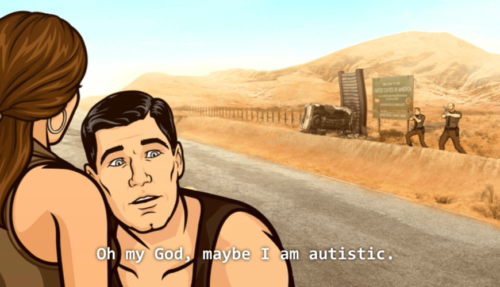
Many have had the experience of being surrounded by right-libertarians and realising that they have absolutely no clue about how other people think, and that this lack of insight inevitably dooms their political philosophy. It’s now apparent to many that the right-libertarian movement is chock full of autists. This essay will argue that right-libertarianism and autism overlap so heavily because they are both highly masculine mindstates with a shared evolutionary genesis.

Right-libertarians often like to paint a picture of how excellently everything would work if there was no welfare. In their minds, the welfare system only incentivises failure. If it was removed, they claim, people would work harder and pull themselves out of poverty rather than “relying on the Government”. Human suffering would decrease as a consequence.

What’s perfectly clear, to the 99% of the population who aren’t right-libertarians, is that this approach completely fails to account for the reality of human behaviour. Pulling the rug out from under tens of millions of struggling people at once would lead to chaos and violence in short order, and the thought that private security could manage enemy odds of hundreds to one is laughable.

Human suffering would increase sharply – and quickly – if we got rid of the welfare system, and a person doesn’t have to be a Dickens scholar to know this. We can simply observe the widespread misery in all times and places that don’t have one. Therefore, no-one will ever get rid of the welfare system, any more than they’ll ever get rid of the law against theft, and for similar reasons. Why don’t right-libertarians understand this?

One approach has it that the major difference between male and female psychology is that the masculine mind is systemising, while the feminine mind is empathising. The logic here is that men and women evolved to fit different niches in the biological environment: the male to the hunting niche, and the female to the gathering and nurturing niche.

Another theory has it that the major difference is that the male brain is autistic while the female brain is psychotic. This is apparent in several ways – chiefly the fact that boys are diagnosed with autism at many times the rate of girls, but also by genetic studies that show that autists tend to inherit from their fathers a disproportionately high number of genetic markers relating to brain development.

Yet another theory points out that men tend to vote for right-wing parties more than women do (a theory supported by the research of our very own Dan McGlashan), and from this draws the conclusion that men are naturally more conservative or orderly than women are.

What all these theories have in common is a realisation that men are not particularly empathetic. After all, the male brain has not evolved to be empathetic. For a hunter, empathy is not useful – in fact, it could even be detrimental if it caused the hunter to hesitate before landing a killing blow. All that really matters is the systemising ability to figure out how to get into position to land the killing blow. That is what is rewarded.

The male adaptation to a hunter’s niche is probably the underlying cause behind both high male rates of autism and of supporting right-libertarian parties. Essentially it’s a matter of a large swathe of people, predominantly men, lacking the brain capacity to imagine what it’s like to be another creature, and thereby coming to support a political movement that simply discounts such experience as a non-factor.

Females, for their part, tend to be neither hunters, autists nor right-libertarians. Their niche required more empathy, because it fell to them to do the bulk of the child-rearing and attending to the sick or old. It’s therefore not easy for women to ignore the suffering endured by other conscious beings. Women (like psychotics) tend to find it stressful when another conscious being is suffering; men (like autists) do not.

In order for a person to become a right-libertarian, they have to be usually masculine, in the sense that they have to have an unusually low amount of empathy for the countless millions who would suffer under their political system. Moreover, they have to keep supporting this system despite the overwhelming opposition from sensible people. These qualities are very similar to the tenacity and stubbornness that autists are infamous for, and probably because of a shared origin in masculine brain structures.

*

If you enjoyed reading this essay, you can get a compilation of the Best VJMP Essays and Articles of 2017 from Amazon for Kindle or Amazon for CreateSpace (for international readers), or TradeMe (for Kiwis).
VJMP Reads: Julius Evola’s Ride the Tiger V

This reading continues on from here.

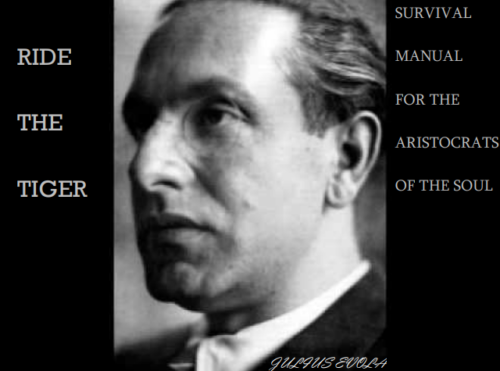
The 13th essay in Ride The Tiger is called ‘Sartre: Prisoner Without Walls’. This essay is very short – only three pages – and concerns itself with the attitude that one ought to take towards inherent freedom. Criticising Sartre’s conception of man as “condemned to be free”, Evola decries the idea that ultimate freedom is any kind of curse, describing this attitude as characteristic of the deep nihilism of the 20th century.

Sartre’s conception of life is, in Evola’s estimation, a fundamentally negative one in that one considers the human experience akin to being a prisoner without walls. For Evola, this maudlin attitude is not appropriate, for it brings with it suffering. Something more is needed.

The 14th essay is called ‘Existence, “Α Project Flung into the World”‘. Here Evola continues to outline his misgivings with existentialism, despite giving it credit for accurately describing the dilemma of the human condition. Existentialism also gets credit for moving beyond primitive solutions like religion and scientific materialism.

As mentioned previously, Evola’s main problem with existentialism is metaphysical. The varieties of existentialism that do not give a satisfactory answer to metaphysical questions are no better than nihilisms. For this reason, the maxim “existence precedes essence” must be rejected. A person is that which transcends the mere physical form; if not, existence is nothing more than morphing randomly into various shapes. Transcendence cannot and will not be found outside the self.

The idea of anxiety over lost choices, opportunities and paths is, for Evola, ridiculous – and materialistic. The transcendent principle ought to exclude such thoughts. The nature of things cannot usefully be said to be sinful in and of itself. Much better to adopt the ancient Greek view of cultivating appreciation of the beauty of limits and form.

The 15th essay is called ‘Heidegger: “Retreating Forwards” and “Being-for-Death” – Collapse οf Existentialism’. The problem with Heidegger, Evola contends, is that his philosophy is motivated principally by a fear of death, in particular the death of the false self, or I. It’s better to disavow identification with the I, and to choose instead to identify with the transcendent, than to march to the drumbeat of death.

Here Evola continues with his criticisms of existentialist philosophy, accusing it of promoting a bleak, sombre and submissive attitude towards the world, one of resignation. Jaspers offers no other solution but faith. In fact, none of the existentialists have offered a satisfactory solution to the problems of nihilism as outlined by Nietzsche. “Existentialism is a projection of modern man in crisis”.

Neither is faith satisfactory, for that is essentially no different from the “Catholic existentialism” that has already been rejected on account of positing the transcendent outside oneself. It must be accepted that God is dead. Transcendence ought not be conceived of as the ‘other’; rather one should begin from the point of transcendence and consider the world from that perspective.

In any case, all of these men, religious and existentialist alike, are written off as petit bourgeoisie, writing about petit bourgeoisie concerns. The real philosophy comes from the men who have survived the “storms of steel and fire” of the early 20th century: those who have been tested. These are the men who understand the true nature of things; they understand “being able to be destroyed, even, without thereby being wounded”.

*

If you enjoyed reading this essay, you can get a compilation of the Best VJMP Essays and Articles of 2017 from Amazon for Kindle or Amazon for CreateSpace (for international readers), or TradeMe (for Kiwis).

Writing Attention Deficit Hyperactivity Disorder

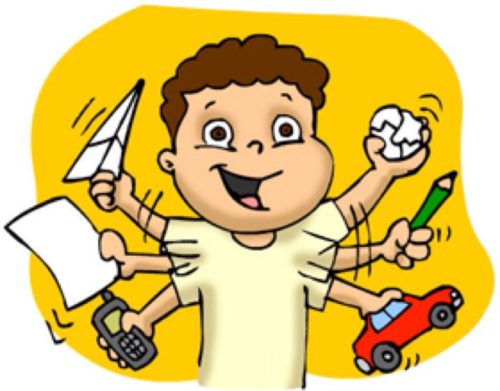
Attention Deficit Hyperactivity Disorder (ADHD) is characterised by problems paying attention, hence “attention deficit”. For whatever reasons, people with ADHD tend to flit like butterflies from one focus of obsession to the next, usually fidgeting the whole time. It might not be one of the most severe mental illnesses, but it’s still capable of severely degrading a person’s quality of life.

People with ADHD often do things without remembering. The cliche is of a person with ADHD hearing their phone ring from the fridge, where they mistakenly put it because they thought it was a carton of milk or similar. This is common because attention has to be paid to something before it can be remembered, and a person with ADHD might have been paying attention to the thoughts in their head instead of the phone in their hands.

Also common for people with ADHD is struggling to complete tasks owing to having difficulty sustaining attention. They might start to complete a task, only to get distracted by something they noticed, and then to get sidetracked from that by a particularly unusual thought (the potential comedy value of such a thing should not be overlooked!).

The experience of having ADHD is, much like many other conditions, one of having too much chaos in one’s life. A character who has it will tend to be very disorganised, for the reason that paying attention to a task long enough to get it done is difficult (and rare).

Writing about this from a first-person perspective will be exhausting. Not only will it be hard to sustain for long, but it will seldom be necessary, for the reader should get the idea very quickly. For this reason, it’s hard to write from a stream of consciousness perspective here. Subtlety will have to be employed to describe an environment that reflects the impact of a person with ADHD.

As with many mental disorders, it’s easy to confuse ADHD with other conditions on account of apparently shared symptoms. A character with ADHD might appear psychotic to another because of a rambling conversational style that leaps from subject to subject. They might also seem dull-witted to someone who’s trying to teach them something that isn’t very interesting.

It’s also distressing to have ADHD (in most cases), and so many symptoms of it are those that are common to other mental disorders and which are ultimately stress-based: insomnia, anxiety, irritability, nausea, low self-esteem etc.

A lot of ADHD-induced behaviour can be mistaken for being on drugs. A lack of apparent ability to pay attention might be explained by another character as drug influence that is forcing the character with ADHD to pay attention to their inner world. The stereotypical caffeine high of jittery behaviour and staccato speech can also be hard to distinguish from a bout of attention deficit. It doesn’t help that use of drugs is common among people with ADHD.

For a variety of reasons, the personal experience of ADHD is frequently one of frustration. The condition itself is frustrating, because it’s hard to get things done and so chores and errands tend to build up and become stressful, but also the world, and its responses to ADHD, are frustrating – and often cruel.

Part of the story of a character with ADHD, then, might be about their experience as an outsider, for two major reasons.

The first is rejection by their peers. People with ADHD, especially as children, tend to behave in ways that lead to low social status. They are often not fun to be around because the fast talking and constant fidgeting puts others on edge. Worse, their attentional deficits can lead to a failure to process speech and body language cues as efficiently as someone without ADHD, degrading the social value of communicating with them.

Someone with ADHD might have trouble finding a friend who has the patience to listen to their machine-gun conversational style. On the other hand, if they do, it is more likely to be a genuine friend. There’s a good chance that the friends of people with ADHD have bonded with them by way of a shared experience of being an outsider.

The second is rejection by society. Society expects its charges to conform to a certain pattern: a pattern of passive, obedient consumerism. A character with ADHD might have trouble fitting into this pattern, because they find it boring as all hell (for good reason). Modern life is experienced by many as a cage, and few people feel this more keenly than those with ADHD.

This can lead to a kind of outsiderhood that brings with it bitterness, but it can also lead to characters who live highly unconventional lives owing to being unable to fit in with the demands placed on them by the standard work place. A character with ADHD could easily be a hero (or anti-hero) who rejected the excessive sobriety and mindless strictures of society in favour of a psychonautic life of consciousness exploration.

It’s easy for a person with an ADHD diagnosis to believe that the problem isn’t with them but rather with the world. After all, the demands of modern schooling are extremely unnatural if one considers that the human child has evolved to suit an environment that contains infinitely more novelty than a school classroom.

Indeed, there is some debate over whether ADHD is a mental disorder at all, or if it’s just a label given to those who have a high desire for stimulation and novelty. The biological past was a far more dangerous, violent, unpredictable – and therefore, exciting – place than the modern classroom or workplace, and it’s not realistic to expect all people to be easily able to make the transition.

It might be that your character is capable of distinguishing themselves from the majority of people with their condition by overcoming it and mastering an area of particular interest. People with ADHD sometimes are better at paying attention than the average person, as long as the subject matter appeals enough.

*

This article is an excerpt from Writing With The DSM (Writing With Psychology Book 5), edited by Vince McLeod and due for release by VJM Publishing in the summer of 2018/19.