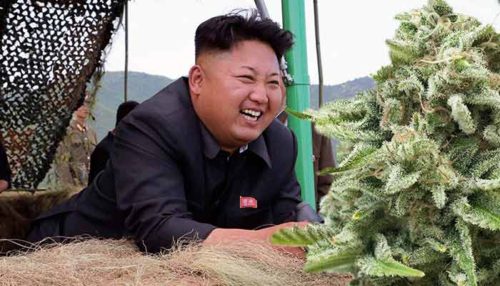
Can North Korea Teach the West How to Have A Humane Cannabis Policy?

Our media has been giving us the Two Minute Hate about North Korea for over two decades. Anyone who has read 1984 knows that most of the reason for this is to distract from the crimes of our own politicians and industrial leaders. One of these crimes is the War on Cannabis: Western Governments could learn from the North Koreans how to have a humane, honest and fair cannabis policy.

For the past 40-50 years, Western Governments have conducted a War on Drugs against their own people, without the consent of those people. Trillions have been spent during these decades to persecute tens of millions of Western citizens, many of whom had not caused any harm to anyone. This mass human rights abuse – because that’s what it is – continues to this day, despite small wins for the people in some areas.

This War on Drugs has been justified with a rhetoric so clumsy and corrupt that even a 1930s-era propagandist would be embarrassed by the lack of subtlety. From the infamous “Reefer makes darkies think they’re as good as white men” to “Cannabis use causes psychosis” to today’s horseshit stories about how buying cannabis is supporting Mexican narcoterrorism, no more hamfisted effort has ever been made to sell anything.

For roughly half a century, Western families have been ripped apart from having one of their family members sent to prison for a cannabis offence. Tens of millions have been forced into a traumatic encounter with the Police and justice or prison systems, treated as criminals when most were mentally ill and needed help. In America in 2016, there were 574,641 people charged with the crime of simple cannabis possession.

One would expect then, that the punishment for cultivating cannabis in a place as fundamentally evil as North Korea would be horrifically draconian and senseless. If it’s up to seven years imprisonment in New Zealand it must surely be life in prison or even execution there.

To the contrary – far from scheduling cannabis as belonging to the most dangerous category of addictive drugs with no medicinal value as America does, North Korea doesn’t even consider cannabis a drug. Not only are people free to cultivate it without sanction, but it grows freely by the roadside in many places, being a weed and not being subject to eradication programs. North Koreans are free to harvest and smoke it every single day – and they do.

Many would personally be happy to trade all the supposed Western freedoms to drink booze, watch television and chase loose women for the freedom to smoke cannabis, have quality conversations with intelligent people and at the end of the night still be capable of maintaining an erection. So one has to ask: who’s actually better off?

The thawing of relations between the West and North Korea might have implications for cannabis policy in the West. Those Westerners who are still labouring under primitive superstitions such as “cannabis causes brain damage and therefore people should go to prison for it” might learn something from the more enlightened approach taken by the North Korean Government.

Perhaps North Korea could send advisors to the West to educate our politicians about how large industries conspired to make cannabis illegal for the sake of wiping out a competitor, and that keeping it prohibited is actually an immoral thing to do. These North Koreans could also be tasked with going through our Police and justice system employees to root out the sadists who believed that imprisoning someone was ever a fair or reasonable response to drug possession, because they are morally defective and cannot be trusted to serve the public.

*

If you enjoyed reading this essay, you can get a compilation of the Best VJMP Essays and Articles of 2017 from Amazon for Kindle or Amazon for CreateSpace (for international readers), or TradeMe (for Kiwis).
Writing Histrionic Personality Disorder

People with Histrionic Personality Disorder (HPD) are colloquially known as “drama queens” or “shit-stirrers”. Fundamental to the disorder is a desire for attention that borders on the narcissistic, as well as strong, shallow, rapidly-changing emotions. This article looks at how to write realistic and believable characters with HPD.

As is the case with many of the conditions in this book (and especially the personality disorders), people with HPD are often high-functioning in several ways. As with most of the conditions in this book, people with HPD can often be entirely competent and effective in their niche. For instance, they excel at screen and theatre acting.

A simple (if crude) way of conceptualising HPD is that, for people with it, drama is like a drug. They get hooked on it, they seek it out compulsively, they try to get bigger and bigger doses of it. The more attention they can draw to themselves the better. A cynic might call them a “psychic vampire” because dealing with them frequently leaves a person tired.

For these reasons, HPD is a fitting and excellent choice for some of the characters in your fiction. A character with HPD will naturally liven things up – even if they end up causing chaos. Because they seek drama out, it is never far from them. Not only do they like drama, but they tend to have just enough narcissism to bring some truly dark emotions out of others.

From the perspective of other characters who might encounter a character with HPD, one of the most difficult things about them is their apparent need to be overly emotional and dramatic all the time. Because emotional reactions are contagious to some extent, a person with HPD will tend to trigger those around them – a great quality in a bartender perhaps, but if there is a need for calmness and order this is usually unhelpful.

Other characters might also find the constant self-aggrandisement extremely tiresome. People with HPD like to use elaborate and flowery speech when unnecessary or even unhelpful, and love to tell stories that feature themselves looking good or being heroic. Such typically unsubtle attempts to draw praise are sometimes described as “needy”. Indeed, it is common for people with HPD to display symptoms typical of Dependent Personality Disorder.

Several common characteristics of HPD overlap with common characteristics of Narcissistic Personality Disorder. One of these in particular is the usual reaction to criticism. For the histrionic, any and all criticism is a brutal personal attack, an act of the utmost cruelty. It is so bad that any retaliatory measures are justified (although a character with HPD will tend toward passive-aggressive revenge tactics).

Related to this is the constant seeking of reassurance or approval. A protagonist with HPD might have compulsive thoughts about not being a good enough person and so seeks out ways of being told that they’re worthwhile. If a character has HPD, there might also be very clear ways that this can be shown through their clothing choice: “Loud and proud” would sum up their dress style.

Other characters might find it very stressful to be around a character with HPD, partially because of the narcissism but mostly because they don’t leave other people in peace. Because of their need to be the centre of attention, a character with HPD might continually butt into other people’s conversations, or make it all about them. They’re also generally happy to spread rumours around, especially if they think that doing so will make someone angry.

A character with HPD might strike other characters as superficial or false. After all, their emotions might strongly rise, but they also strongly fall and quickly transform into other ones. A second character might come to feel that they can’t really trust the histrionic one. It’s hard to know whether they’re acting or genuine.

One area in which the lives of people with HPD tend to be in particular disarray is romantically. They commonly perceive sexual interest where none exists. This makes their own lives difficult, as they often end up misreading the signals and making a move on someone who then rejects them. It can also make other people’s lives difficult, as people with HPD tend to perceive sexual infidelity where it doesn’t exist. This jealousy can fuel untold dramas.

On a darker note, people with HPD are well-known for hitting on people who are already in established relationships. This is partly because of the aforementioned tendency to perceive sexual interest where none exists, but this can also be influenced by a narcissistic refusal to respect other people’s boundaries and an inability to delay gratification.

Having said that, people with HPD are often very engaging to make love to. Excessive sensitivity and dependence on other people’s approval can make for a powerful contribution to the bedroom magic.

Adding a character with HPD to your story, or adding aspects of it to a character in your story, has the potential to liven things up but there is a risk that it can also make things more trivial. Because histrionic characters can get upset over small things, they can be hard for the reader to relate to, and therefore are often better as a foil to another character or as comic relief.

*

This article is an excerpt from Writing With The DSM (Writing With Psychology Book 5), edited by Vince McLeod and due for release by VJM Publishing in the summer of 2018/19.

The Solution to the Authoritarian Right Wing is Not the Authoritarian Left but Libertarianism

The answer to right-wing authoritarianism is not more authoritarianism only with a softer face

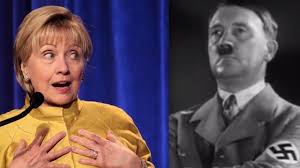
The Western World is still recoiling at, but fascinated by, the horrors of World War II. Consistent with Francis Fukuyama’s Great Pendulum Theory, we have been looking for solutions to the problems of life that led us into World War II and this has pushed us to the far-left. This essay will argue that the solution to the excesses of the authoritarian right is not authoritarian leftism but libertarianism.

The authoritarian left can be found crying crocodile tears over all kinds of suffering that it blames on the right, in the hope that they can gather more power as a result of the ensuing outrage. Characteristic of the authoritarian left is that they make the same critiques of capitalism and verticalised social structures as the libertarian left, but they offer radically different solutions.

Instead of more freedom for good people, the authoritarian left seeks less freedom for bad people. It sounds like it should lead to similar results, but it doesn’t. Less freedom for good people is one obvious side-effect, but this is considered merely a bit of collateral damage. Those who lose out will understand that such measures were necessary for the sake of the greater good – and if they don’t understand this we will force them to.

Another flaw of the authoritarian left is their bloodlust for punishing those who they consider to have transgressed the moral code. In this sense, the authoritarian left is no less vicious than the authoritarian right, only they purport to brutally punish people to further an agenda of horizontalism instead of one of verticalism. Anyone who tries to elevate one person or group above another is to be ripped down.

Right now, the wet dream of all authoritarian leftists is control of public speech, especially on social media. There is nothing that they would like more than to bring in “hate speech” laws governing social media discourse, so that anyone who expressed a politically incorrect sentiment would be harassed by the Police. Their logic is that if the people were forbidden from expressing certain dangerous ideas then those ideas would become less widespread, thereby dispelling the danger.

The real problem with authoritarian leftism is that the people promoting it are also promoting authoritarian solutions, which tend to mutate back into authoritarian rightism before anyone realises it. As mentioned above, the authoritarian leftists tend to make accurate and fair criticisms of right-wing policy – the problem arises when their recommended response to those criticisms is to centralise more power in their own hands.

The real solution to the problems of the authoritarian right is libertarianism, whether of the left or the right variety. That some on the libertarian left are unwilling to concede this point is a real danger. If the libertarian left is unwilling to co-operate with the libertarian right to oppose authoritarian solutions, they will find the authoritarians co-operating to split the libertarians in half.

Currently, there is a large risk that the extreme, authoritarian right will come back to prominence as a consequence of the social unrest brought about by mass Third World immigration into the West, especially Europe.

The authoritarian left’s solution to this problem is to “stop bigotry” by cracking down on what they deem “hate speech”. Because the dogma has it that all human groups are precisely equal in all ways, any economic disparity between one group and another must come from the malicious efforts of the wealthy group to undermine and impoverish the poor one. Therefore, Third Worlders can only be poor and violent because of prejudice, which must then be stamped out.

The problem with this is, if and when the authoritarian right comes back into power, they will have all these hate speech laws already on the books and a population conditioned to accept gross abuses of state power in the service of some spurious link to a greater good. They might even have – worst of all – a population desperate for change, baying for blood and with hate speech laws on the books. Then it’s a simple matter of adjusting the definition of hate to “speech against nation/race/ruler” and we have another genocide on our hands.

Beating the authoritarian right will require that we intelligently encourage avenues of freedom that take people away from the left-authoritarian/right-authoritarian cycle. If we love freedom more than we love our own delusions that we can perfect the world by force, then we can accept that working towards libertarianism is a worthwhile goal, regardless of whether it’s left or right in form.

This will require that the ruling powers guarantee the cognitive liberty of the people. In particular this means to keep the Internet free, to keep artistic expression unrestricted, to keep the press free and to refuse all punitive forms of drug prohibition.

*

If you enjoyed reading this essay, you can get a compilation of the Best VJMP Essays and Articles of 2017 from Amazon for Kindle or Amazon for CreateSpace (for international readers), or TradeMe (for Kiwis).