
Anarcho-Nihilism

There are two popular strains of anarchism that are often conflated. The first accords with the more traditional definition of anarchy as “without rulers”; the second is when a person supports anarchy just because they want to see the world burn. This essay gives a name to this latter tendency, with the intent of making a clear distinction: anarcho-nihilism.

It isn’t easy for most people out there to tell the difference between an anarchistic sentiment against being ruled and anarcho-nihilism.

For one thing, a sentiment against being ruled inevitably brings a person into conflict with the ruling class, who tend to think that they have achieved their position by divine right. The ruling class can usually only hold its position by creating the perception that they are uniquely qualified to rule. Someone who is against being ruled, and someone who just wants to trash everything, are therefore similar in that they both oppose the ruling class.

This means that both usually find themselves socially outcast for not following orders in a sufficiently timely and enthusiastic manner.

For another thing, both anarchists and anarcho-nihilists accept that there is going to have to be a lot of destruction before this shit can get sorted. The Establishment is well entrenched: they own all the media, all the politicians, and all the lackeys with guns. Their fingers are in every pie, and any efforts to prise them out will be violently resisted, sometimes pre-emptively. There is going to have to be a lot of destruction.

The major difference is that the anarcho-nihilist has no plans for what to do after the destruction phase. That phase – the building and creating phase – is not important to them, in much the same way that neither building nor creating appeal to nihilists. What motivation could one have to build anything when no meaning exists?

A normal anarchist will have thought things through a bit further than just the destruction phase. Indeed, if the ‘anarcho’ prefix denotes the complete destruction of the current system, then the suffix denotes what a person’s preferred next move is. An anarcho-capitalist wants to get rid of the current system so that they can make money, an anarcho-communist wants to get rid of the current system so that they can co-operate, a mutualist wants to get rid of the current system so that they can trade, and an anarcho-homicidalist believes that humans know intuitively how to govern themselves fairly and how to build a society if not impeded by enslavers.

Someone who hasn’t thought things through this far might be an anarcho-nihilist.

Often, an anarcho-nihilist will be driven by a peculiar bitter resentment, sometimes because of a personality disorder. The fact that an immediate shockwave of destruction would cause a tremendous amount of misery is not a drawback to such a person – indeed, it could be the whole reason for why they support it.

The real difficulty with anarcho-nihilists, from an anarchistic perspective, is that no bonds of any kind can be formed with nihilists. In order for people to have a common bond of any kind, they must have at least one belief in common. Someone who believes in nothing is hard to trust – after all, what’s stopping them from turning on you like a wild animal?

Another way of making the distinction is that an intelligent anarchist will strive to find the correct balance of inducing chaos to the establishment and building a new, voluntary and peaceful order. The anarcho-nihilist doesn’t worry about order: they just want chaos and more chaos for the sake of it. There is no order that they will agree to.

The problem with this attitude from a practical point of view is that some laws are in place to contain natural disorder, they just go too far. For instance, a law proscribing a side of the road that traffic has to drive on is hardly tyrannical. The problem arises when you are fined $2,000 for harmlessly crossing the centre line by six inches when there was no oncoming traffic.

Overcoming anarcho-nihilism is extremely difficult, because it is not usually a position taken because of political philosophising – it’s usually a position taken because of a spiritual failure. Therefore, the path out is not obvious.

*

If you enjoyed reading this essay, you can get a compilation of the Best VJMP Essays and Articles of 2017 from Amazon for Kindle or Amazon for CreateSpace (for international readers), or TradeMe (for Kiwis).
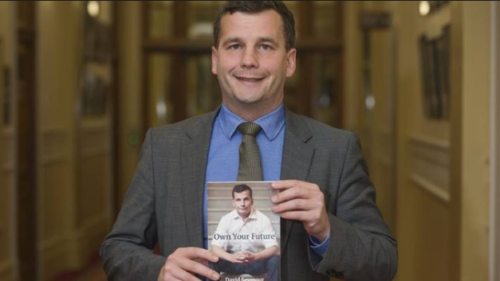
VJMP Reads: David Seymour’s Own Your Future V

A Liberal Vision for New Zealand in 2017

This reading carries on from here.

The fourth chapter in Own Your Future is ‘Education’. Seymour opens this essay with a mention of Vanguard Military School, the establishment of which he credits to ACT. This is an “exceptional” story because New Zealand’s education system is “a mess”. Although he writes that no-one begrudges the $12,000,000,000 yearly cost of educating New Zealand’s 800,000 students, many people have problems with the outcome.

New Zealand has a lot of problems because people aren’t literate enough, Seymour says. This is why employers “prefer a stream of immigrants”. There is a long, rambling passage here where Seymour touches on a variety of themes, including having a go at Hekia Parata. Apparently New Zealand is going backwards in PISA rankings. It’s hard to tell who Seymour is blaming for the mess in question.

Without a hint of irony, Seymour writes that “the outcomes have got worse for kids from poorer backgrounds”. Most Kiwis could tell him that the reason for these worsening outcomes were the policies of the Fifth National Government, which raised GST on those kids from poorer backgrounds while cutting other people’s taxes, and cutting services to those same poor.

What Seymour pushes here is the idea of a variety of schools with different cultures, which he believes will better suit the individual needs of the various students than the current “one size fits all” model. It follows from this that the Government is not the best provider of education services, because they don’t tend to tailor things to the individual needs of the citizens.

Much of this section reveals the specifically Auckland-centric focus that ACT has always had, and which leads it to get very, very few votes outside of that city. The logic behind the school zoning system is dissected at length, but this only really applies to Auckland and, to a small extent, Christchurch and Wellington. Perhaps Seymour is writing more as Epsom representative here.

True to form as a politician, Seymour demands that teachers be better trained and better resourced, but doesn’t explain where this money will come from. Despite this budget hole, it’s hard to deny that Seymour has several good points here. The cultures of individual schools are usually too sclerotic to adjust to the changing needs of pupils, so they could be supplemented by Partnership Schools that more specifically meet the needs of their students.

These Partnership Schools would be run more like private schools and could be easily closed down at any time if they were underperforming. Seymour touts this as a major feature, on account of the difficulty with doing so in the public sector. Students would be best served by flexibility in the educator sector, which is an intelligent way of increasing value without spending more money.

*

If you enjoyed reading this essay, you can get a compilation of the Best VJMP Essays and Articles of 2017 from Amazon for Kindle or Amazon for CreateSpace (for international readers), or TradeMe (for Kiwis).

Te Reo With Mnemonics: Government Words

Government – kāwanatanga

A Government official, in charge of the Government car fleet, instructs a subordinate in a fancy uniform to “Give Car One a tonguing”.

Ministry – manatū

A Government official comes out of a tall building and says “We’re the Ministry of Taxes… and money, too!”

Minister – minita

A man in a suit buys an icecream from a stand. The girl holds up two cones and says “Maxi or mini, Minister?” The man says “Mini, ta.”

Office, Department – tari

Inside a WINZ office, there is tar everywhere: all over the floors and computers. The office is very tarry.

Responsibility, responsible – haepapa

A boy looks at a field strewn with hay and asks his father “Hey, Papa, who’s responsible for this?”

General Election – pōtitanga whānui

A child sits on a potty with its tounge sticking out. It is the potty tonguer. A man says “This General Election I think the best choice is the potty tonguer, far and away.”

The Māori word for ‘to corrupt’ – pōriro – shares a ‘pō’ and ‘ri’ sound with the English word ‘porridge’

Election, vote – pōti

A sign outside a porta-potty says “Election Today! Vote Here!”

Rebellion, Revolt, Revolution – whananga

Hone Heke is giving a speech, he promises to rebel “far and near”.

to corrupt – pōriro

A waitress pours some water into a man’s porridge. He gets up and complains “Now it’s corrupted!”

Officer, Official – āpiha

A man in uniform salutes a man behind a desk and says “Officer Pea Heart, reporting for duty.” The man behind the desk rises and says “Ah, Pea Heart…”

to agree, to assent, Permission – whakaae

Both seated at a desk, a woman shows a man a contract and asks “Do you agree?” He replies: “Fucken A!”

Chieftainship, Sovereignty, Authority – rangatiratanga

A chief is giving a speech to a war party. He holds up a gold ring and says “By the authority vested in me through my possession of this ring, tear a tongue!”

*

The above is an excerpt from the upcoming Learn Maori Vocabulary With Mnemonics, by Jeff Ngatai, due to be published by VJM Publishing in the summer of 2018/19.

Writing Avoidant Personality Disorder

Avoidant Personality Disorder (AVPD) is characterised by extreme action taken to avoid certain feared stimuli, usually social. Social anxiety, feelings of unworthiness, timidity and sensitivity lead to a pattern of avoiding situations that involve interacting or socialising with others. This article looks at how to write engaging and realistic characters with the condition.

AVPD is a Cluster C personality disorder, which means that it’s primarily an anxious condition. The essential characteristic of it is an inability to form social bonds brought about by an extreme desire to avoid particular feared stimuli. For example, people with AVPD tend to be very sensitive to social rejection or humiliation.

It is believed to be caused by abusive or neglectful parenting patterns. In particular, rejection by one or both parents is thought to correlate highly with the condition. It can be observed in other mammals that rejection by one or both parents sharply reduces the ensuing life expectancy for that creature. No doubt the trauma from such treatment makes an impact on the behaviour of human survivors.

If your protagonist has AVDP, it might be that they experience loss and social rejection so strongly that they are simply devastated by it. They might have an internal monologue that heavily plays on fears of social encounters going wrong. A story featuring them might read very strangely as it involved a number of events that ended up not happening or not being attended by the protagonist, who felt too anxious to participate.

This can easily lead to a darker, resentful pattern of behaviour, especially if a protagonist with AVDP comes to feel a malicious desire for revenge as a consequence of their rejection. Social rejection need not lead to learned helplessness and submission in every case – it can lead to violent reprisals, especially if the rejected person feels that they have been treated unjustly.

Someone with AVDP might make a convincing villain if the author can convincingly portray a character who has become nasty as a result of their pride. It might be that the villain received some mild slight or insult and their massive ego was punctured, leading to narcissistic rage. They could be the sort of person who never forgives an insult, leading to complicated revenge schemes.

To many outside observers, AVPD looks very similar to just having low self-esteem. People with the condition tend to believe that their social presence is unwanted, and that they are unworthy of the time and attention that they are given in their social relationships. In cases of parental rejection it’s obvious how such thinking might come about, but it can be caused by other things, such as a generalised perception of social rejection.

In the mind of a character with AVPD, the everyday experience might be one plagued by self-doubt and feelings of unworthiness, in much the same way that it can be for a depressed person. Indeed, one particular strain of AVPD has a number of depressive features, in particular the casting away of, and refusing to deal with, certain traumatic memories.

A protagonist with the condition is likely to consider themselves socially inept. There might be a lot of blame directed at the self in their internal monologue. It’s possible that there is a personal quality of their own that they fixate on as an explanation for their lack of social success. As mentioned above, this can easily become projected outwards onto society.

People with AVPD can be difficult socially because they can be very needy and very resentful. There is a particular strain of the condition that is hypersensitive in a way that is not dissimilar to those with Narcissistic Personality Disorder. This type can become easily wounded by jokes or banter, to the extent that others might call them “precious”.

Feedback loops are an unfortunate common effect of this condition. Anxiety about being socially rejected often leads to a range of behaviours that themselves increase the likelihood of social rejection. Anxious eye contact often appears shifty to other people, who then come to distrust the person with AVPD. Because these people trust the person with AVPD less, they speak to them in a less friendly manner, which validates the initial feelings of anxiety and strengthens the avoidant behaviours.

A protagonist with AVPD might find their everyday experience tormenting, because people with the condition have a normal need for social interaction and intimacy – they just fear it. Because of this fear, and sometimes because of resentments, a protagonist with the condition might find their everyday experience tormenting. It might be a relentless march of anxiety, blame, missed opportunities, guilt and rejection.

AVPD sounds, and is, similar to Schizoid Personality Disorder, but there are crucial differences. For one, a character with AVPD will like be more anxious than a schizoid. For another thing, schizoids don’t generally care about other people, whereas people with AVPD will still desire positive social contact.

*

This article is an excerpt from Writing With The DSM (Writing With Psychology Book 5), edited by Vince McLeod and due for release by VJM Publishing in the summer of 2018/19.